Blog
-

The Mau Movement and the Samoan Independence Struggle of 1929: The Death of Prince Tamosese and the Role of New Zealand Marines
On Saturday, December 28, 1929, there was a large peaceful march in the capital city of Apia to honor the members of Mau who had been expelled by the authorities. However, the authorities were vehemently opposed to the Mau, and during the march, they opened fire in an attempt to arrest the demonstrators. Amidst the chaos, the leader of the Mau, Prince Tamosese, was killed, which led the Mau to declare its intention to seek independence from New Zealand. A…
-
History of New Zealand: Arrival of Southeast Asian settlers and Maori people
It is believed that the first inhabitants of New Zealand were people from Southeast Asia who migrated eastward from island to island until they reached the Central Pacific. From there, they continued southward until they reached New Zealand, estimated to have occurred around 750 B.C. They named New Zealand “Land of the long white cloud” or “Aotearoa”. The Maori people arrived in New Zealand around 750 AD. According to legend, a second group of Maori arrived in the 13th and…
-
Yoshiko Kawashima: The 14th Princess of Qing Dynasty and Her Complicated Life Between China and Japan
Do you know Yoshiko Kawashima? Yoshiko Kawashima was born in Beijing in 1907 as the 14th princess of Prince Su, a member of the Qing Dynasty imperial family. Her real name was Aixinjueluo Xianzhi. It was the end of the Qing dynasty, and her father was struggling in the court to make the Qing dynasty a constitutional monarchy like the Meiji Restoration in Japan, instead of the old absolute monarchy, in order for the dynasty to survive the times. …
-
Life and Legacy of Yoshinobu Tokugawa: Last Shogun of Japan
The Tokugawa shoguns were traditionally supposed to be buried in turn at Kan’eiji Temple and Zojoji Temple. However, after the Meiji Restoration, Yoshinobu Tokugawa was demoted to the status of a duke. As a gesture of gratitude to Emperor Meiji, he converted to Shintoism, the same religion as the Emperor, and was buried in Yanaka Cemetery, which was established by the Meiji government. Yoshinobu Tokugawa was born in the Kamiyashiki of the Mito Domain, which is now Koishikawa Korakuen in…
-
Map and Importance of Kan’eiji Temple, Zojoji Temple, Asakusa Shrine, Hieda Shrine, and Kanda Myojin Shrine in Edo, with Connection to Edo Castle
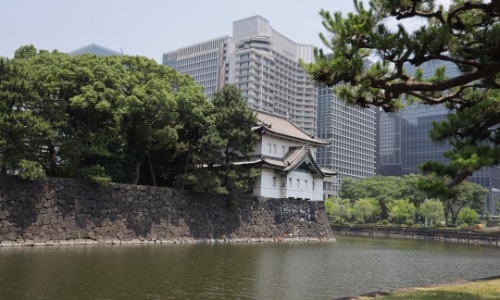
Let’s examine a map of Kan’eiji Temple and Zojoji Temple, where the tombs of the Tokugawa shoguns are situated, as well as Asakusa Shrine, Hieda Shrine, and Kanda Myojin Shrine, where the three major festivals of Edo take place. The line connecting Kan’eiji Temple, Kanda Myojin, and Zojoji Temple with Asakusa Shrine and Hieda Shrine intersects at Edo Castle. These five temples and shrines form a protective belt-like shape across the northeast to southwest direction, which is known as the…
-
Tokugawa Ieyasu and the Demon’s Gate: The Importance of Kunouzan and Nikko Shrines
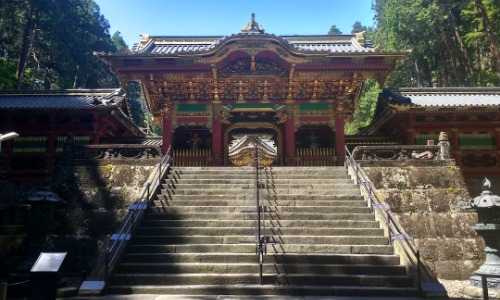
This belief is rooted in the concept of “Kimon,” or the demon’s gate, which suggests that evil spirits enter through the northeast and southwest directions and must be safeguarded. Even today, this idea is taken into account when constructing homes in Japan. The northeast direction, known as “Kimon,” is believed to be the gateway for malevolent entities, while the opposite direction, the southwest, is called “Urakimon.” This belief was prevalent during the reign of Tokugawa Ieyasu, who wished to be…
-
Tokugawa Family Mausoleum at Zojoji Temple: History and Information
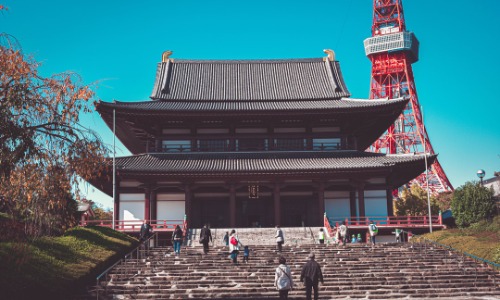
Zojoji Temple was designated as the family temple of the Tokugawa family by Tokugawa Ieyasu. Six Tokugawa shoguns (Hidetada II, Ienobu VI, Ietsugu VII, Ieshige IX, Ieyoshi XII, and Ieshige XIV) and their respective family members and children are buried there. The mausoleum was a magnificent structure and designated as a national treasure, but it was destroyed during an air raid, and the bodies were reburied at the current location. The mausoleum is open to the public from 10:00 to…
-
Masakado’s Sacred Tomb: The History of a Cursed Land in Japan
This is a story about a tomb of Masakado who died with a grudge. The tomb is considered sacred and must never be defiled, as it may offend the deceased. In 1924, the Ministry of Finance constructed a government building on the land where the tomb was located. However, the Minister of Finance and 18 other bureaucrats died, leading to the panic-induced demolition of the building. In 1945, after World War II, the GHQ (General Douglas MacArthur’s official general headquarters)…
-
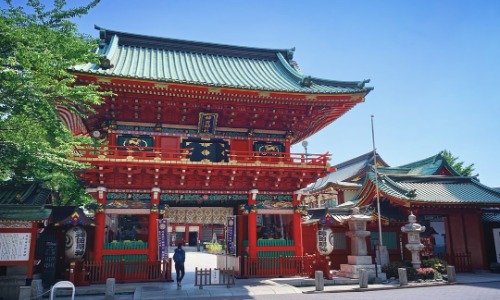
Kanda Myoujin Shrine: History, Legends, and Festivals of the Deified Masakado in Tokyo
Kanda Myoujin is a shrine dedicated to Okuninushi no Mikoto, the god who is said to have created the nation of Japan. According to legend, he was once the king of Japan, but was eventually subjugated when asked to hand over the country to the Yamato Imperial Court. The shrine was originally built by the people in 780 and is located in present-day Tokyo. In 935, the head of Taira no Masakado, a famous samurai, was buried nearby. In the…
-
Masakado Rebellion: The Fight for Independence in Medieval Japan’s Kanto Region
Japanese history includes the conquests by the Yamato Imperial Court, which held influence over the Kinki region. However, history is written by the victorious, and future generations can only read what is recorded. In the 9th century, Japan was divided into three regions: western Japan (Kyushu), which was under the control of the Yamato Imperial Court (Kyoto and Nara); the Kanto region (around Tokyo), which followed the court reluctantly; and the Tohoku region, which did not follow the court at…
-
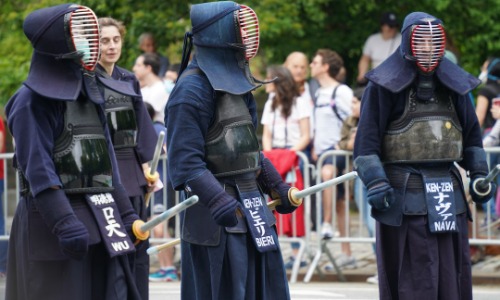
The Nippon Budokan: A Sacred Venue for Japanese Martial Arts and Music, Home of the Deity Taira no Masakado
The Budokan is a training hall and stadium for Japanese martial arts, originally built as the venue for Judo competitions during the 1964 Tokyo Olympics. It is considered a sacred place for Japanese martial arts. Since the Beatles’ concert in 1966, it has also become a sacred place for music and a coveted stage for many musicians. However, as it was not originally designed as a concert hall, the sound quality is not ideal, but it is believed that musicians…
-
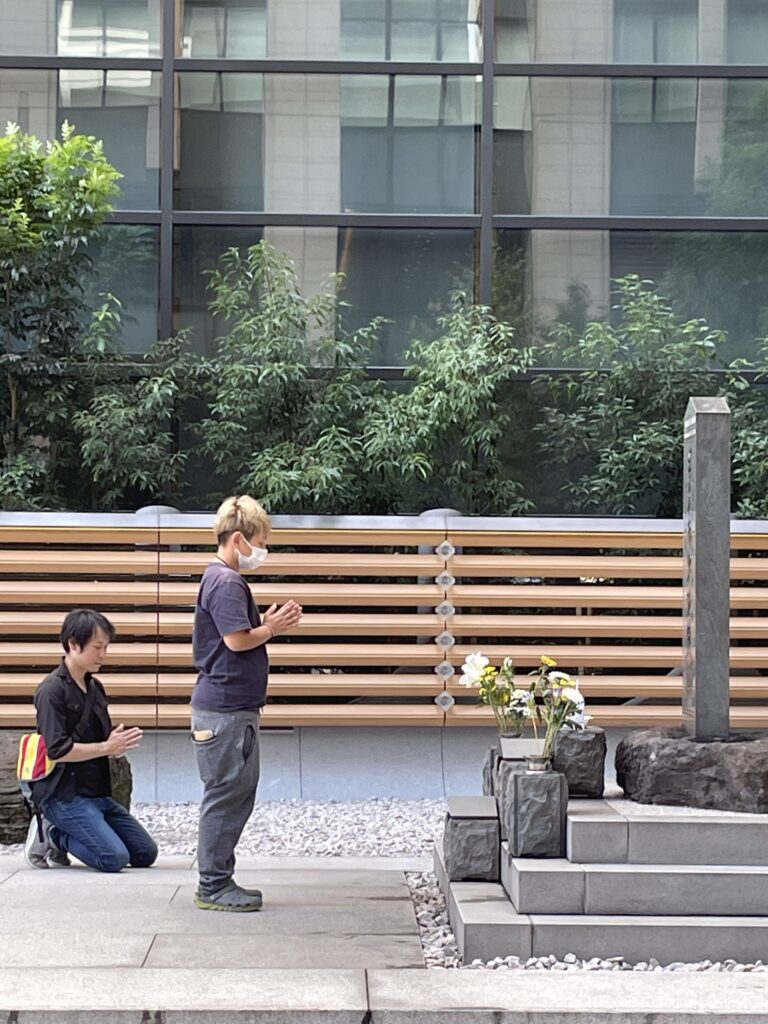
The Terrifying Legend of Taira no Masakado’s Head Mound that Still Haunts Tokyo’s Otemachi District
One of the most feared places in Tokyo is the head mound of Taira no Masakado, located in Otemachi, Chiyoda-ku. Masakado was originally from the nearby Tokyo area and rebelled against the Imperial Court in the Heian period (794-1185), attempting to establish an independent state in the area. He was defeated and executed in Kyoto, but legend has it that his head flew back to this location. To show respect and avoid offending Masakado’s spirit, people who work in nearby…