-

Why Can Shizuku Talk to Spirits? The Gods of Suwa Behind The Elusive Samurai
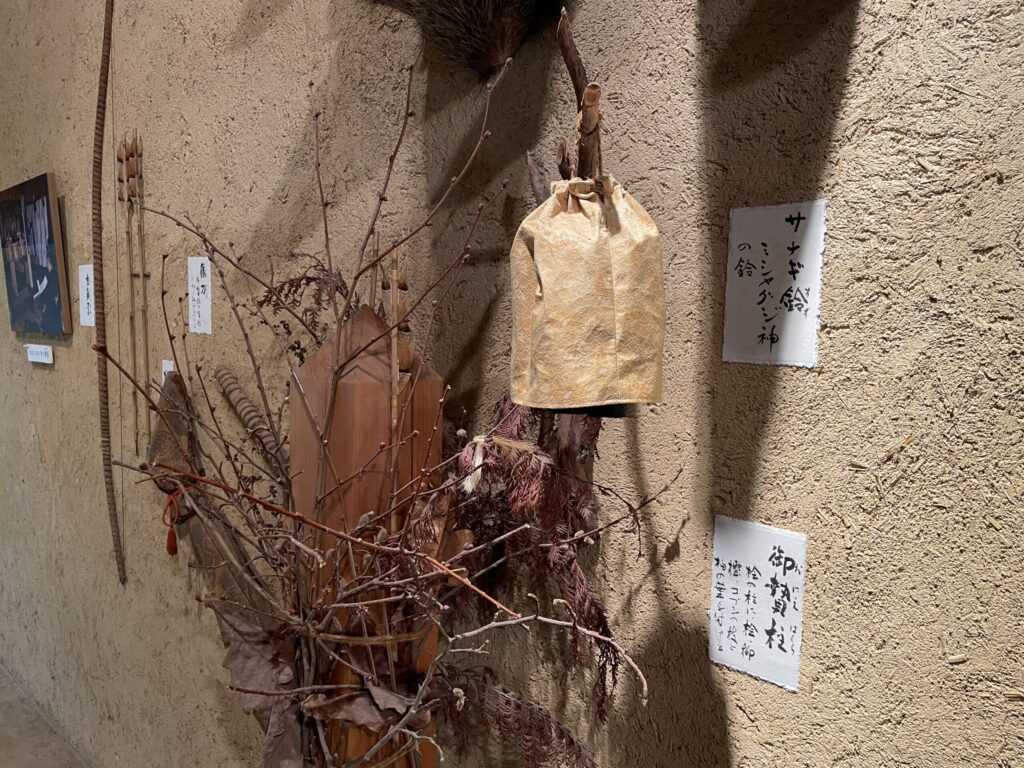
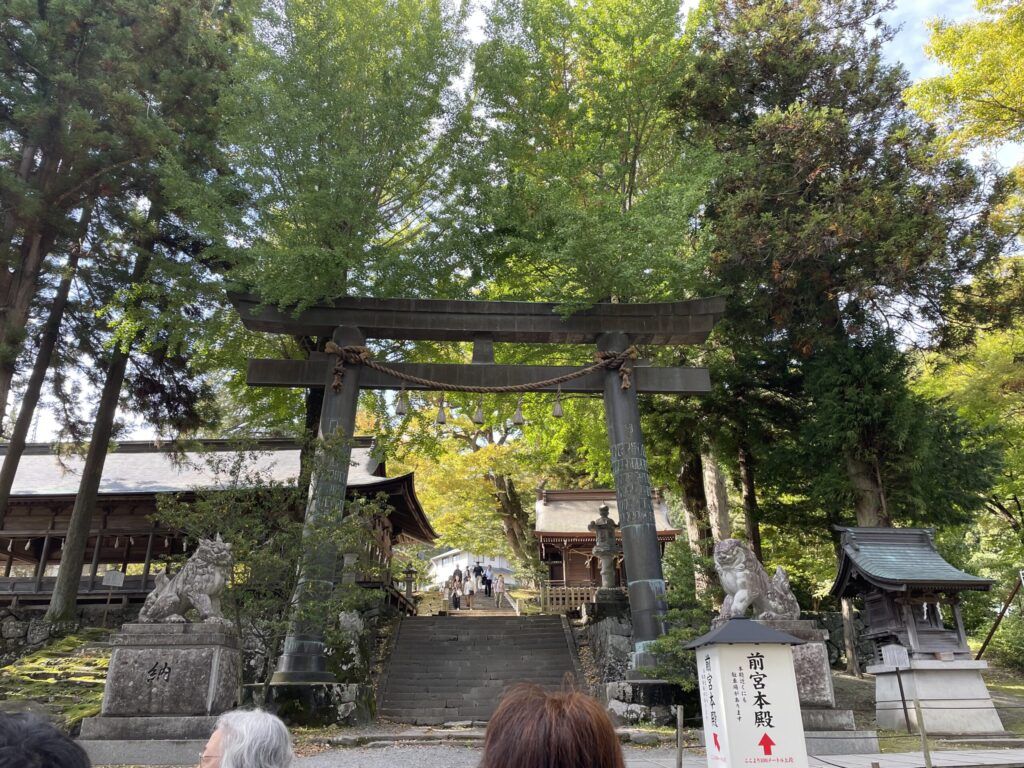
Introduction In The Elusive Samurai, a mysterious girl named Shizuku stands beside Suwa Yorishige. She can talk with spirits and sacred beasts. A guide in Suwa told me he thinks Shizuku is modeled on Mishaguchi, the ancient god of Suwa, or on the Moriya family, who called that god down. So who is Mishaguchi? The gods of Suwa never stayed in one form. A Jōmon serpent god, a god defeated in Japan’s founding myths, a dragon god who raised the…
-
Could Suwa Yorishige See the Future? Life in a Living God’s House
The Head of a Living God’s House: How Suwa Yorishige Actually Lived Introduction In The Elusive Samurai, Suwa Yorishige is the man who shelters the young Hōjō Tokiyuki. The real Yorishige had two faces. He was head of the family that produced a living god, the Ōhōri of Suwa Upper Shrine. He was also a vassal of the Kamakura shogunate, and more than that, a private retainer (miuchibito) of the Hōjō main line. This article follows both lives: the god’s…
-
Hou Sheng — The Chancellor Who Destroyed Qi Without Lifting a Finger
In the final years of the Warring States period, as Qin stood on the verge of unifying China, the last state left standing in its way was Qi. Yet what decided Qi’s fate was not the strength of a foreign army. It was betrayal from within. At the center of that betrayal stood one man: Hou Sheng, chancellor to King Jian of Qi. Another chancellor who took Qin’s gold and brought down his own country was Guo Kai of the…
-
The Jiaqing Emperor — How Wei Yingluo’s Son Locked the Qing Dynasty into Decline
This article is the starting point of the series on how the Qing dynasty’s “mindset of decline” took shape. The next emperor, who inherited that mindset and lost the Opium War, is covered in “[The Daoguang Emperor — The Miscalculation of Filial Piety],” followed by the Xianfeng Emperor, Empress Dowager Cixi, the Tongzhi Emperor, and the Guangxu Emperor. Late Qing Series | The Emperors Reigned 1796–1820 (25 years) / Born 1760, died 1820 Father: the Qianlong Emperor Mother: Consort Ling…
-
Xianfeng Emperor: Rivalry, Dependence, and the Rise of Cixi
This is the main article on the Xianfeng Emperor as a person, a ruler, and a mind. The collapse of his finances—the flood of debased “big coins,” hyperinflation, and the lijin transit tax—is covered in the companion article, “[The Xianfeng Emperor’s Financial Collapse: Big-Coin Hyperinflation and the Origins of Qing ‘Warlordization’].” Late Qing Series | The Emperors Reigned 1850–1861 (about 11 years; the “Xianfeng” era began in 1851) / Born 1831, died 1861 (aged 30) His final scheme ironically opened…
-
Why the Queen Dowager Outranked the Queen
In English, “Queen Dowager” sounds like a widow with a courtesy title — dignified, senior, and essentially retired. In Warring States China, 太后 (taihou) meant almost the opposite: the head of the entire inner court, ranked above the queen, and very nearly impossible to remove. Get this one word wrong and a whole category of Chinese history stops making sense. Why did women from the humblest backgrounds fight so hard to put a son on the throne? Why could nobody…
-
The Empress’s Clever Strategy in the Inner Palace | The Art of Never Dirtying Your Own Hands in Empresses in the Palace
Who is the most frightening character in the Chinese palace drama Empresses in the Palace (original title: 甄嬛传, The Legend of Zhen Huan)? Many viewers would name Consort Hua, who flies into rages and punishes people openly. But the truly frightening one may be the Empress, who always wears a gentle smile. In this article, I read the Empress’s moves at the time Zhen Huan and the other new candidates enter the palace, through my own interpretation, “Satoe’s Take.” *The…
-
Suiyu Xuan in Empresses in the Palace: Where Was Zhen Huan’s First Home, and What Does Its Name Mean? | The Cruelty of the Inner Palace Begins Before She Even Enters
If you have watched the Chinese palace drama Empresses in the Palace (original title: 甄嬛传, The Legend of Zhen Huan), you probably remember Suiyu Xuan (碎玉轩), the lodging given to Zhen Huan when she first entered the palace. Did Suiyu Xuan really exist in the Forbidden City? And why does it carry such an ominous name, “the Pavilion of Broken Jade”? If we follow the scenes surrounding Suiyu Xuan, we begin to see the quiet terror of the world called…
-
An Lingrong: The Only One Who Never Joined Zhen Huan
Empresses in the Palace character study (The Flowers of the Inner Court / Tragedies Born of the System). A counterpart to “[Concubine Qi]” (raised with too much love): An Lingrong was raised by toxic parents. Like [Shen Meizhuang] and [Huanbi], she found death to be the only way out. An Lingrong: The Only One Who Never Joined Zhen Huan In The Legend of Zhen Huan (known in English as Empresses in the Palace), few characters meet a more hopeless end…
-
Empresses in the Palace: Empress Chunyuan and Yixiu Were Born from One Real Empress — The True Story of Empress Xiaojingxian
Note: In the drama Empresses in the Palace *(Legend of Zhen Huan, 甄嬛伝), neither Empress Chunyuan nor Empress Yixiu actually existed. But behind both of them stands a single real empress: the Yongzheng Emperor’s principal wife, Empress Xiaojingxian (孝敬憲皇后) of the Ula-Nara clan (烏拉那拉氏). The Short Answer: Chunyuan and Yixiu Are the “Light and Shadow” of One Empress Let’s start with the most important point. Empress Chunyuan and Empress Yixiu are both fictional characters created for the drama. However, the…
-
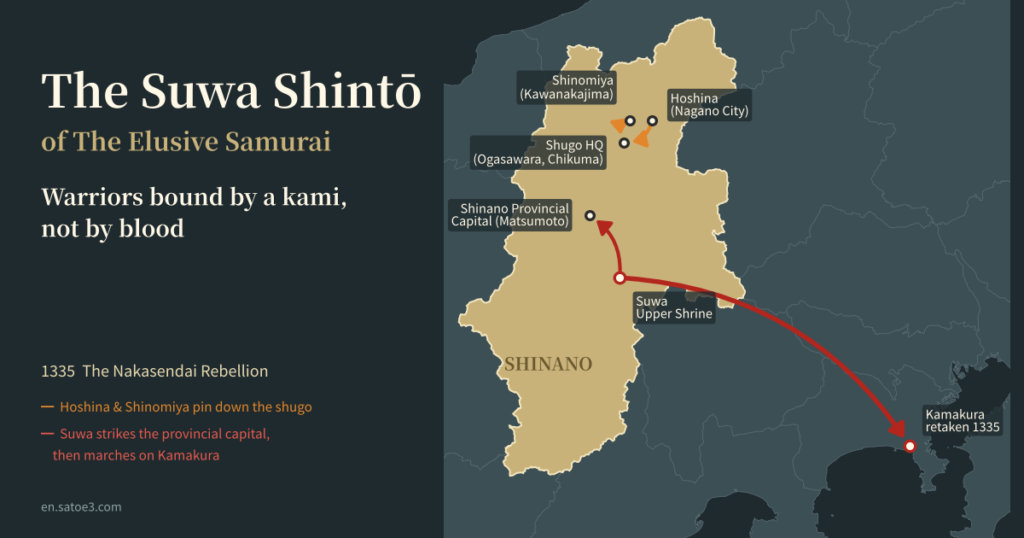
The Suwa Shintō of The Elusive Samurai: Warriors Bound by a Kami, Not by Blood
If you have read or watched The Elusive Samurai, you already know the Suwa Sect: Suwa Yorishige and his allies Hoshina, Shinomiya, Unno, Nezu and Mochizuki, who risk everything for the young Hōjō Tokiyuki. In history this group is called the Suwa Shintō (諏訪神党), literally “the band of the Suwa kami.” It was not a single family. Its warriors came from all over Shinano Province, today’s Nagano Prefecture. So what held them together? The answer is faith in the kami…
-
Why the Archers at Kamakura Are Still There: Eight Hundred Years of a Skill Nobody Could Steal
If you have seen photographs of Kamakura, you have probably seen this one. A rider in medieval court dress, bow drawn, thundering down a sand track past a wooden target. Yabusame — mounted archery — at Tsurugaoka Hachimangū. It is spectacular, and it photographs beautifully, and almost every caption describes it the same way: samurai horseback archery, a demonstration of martial skill. That description is accurate and it misses the entire point. The remarkable thing is not the shooting. It…