-

Are the Retainers in The Elusive Samurai Real? The Shinano Clans Behind Kazama, Nezu and Mochizuki — And What It Meant to Take a Name
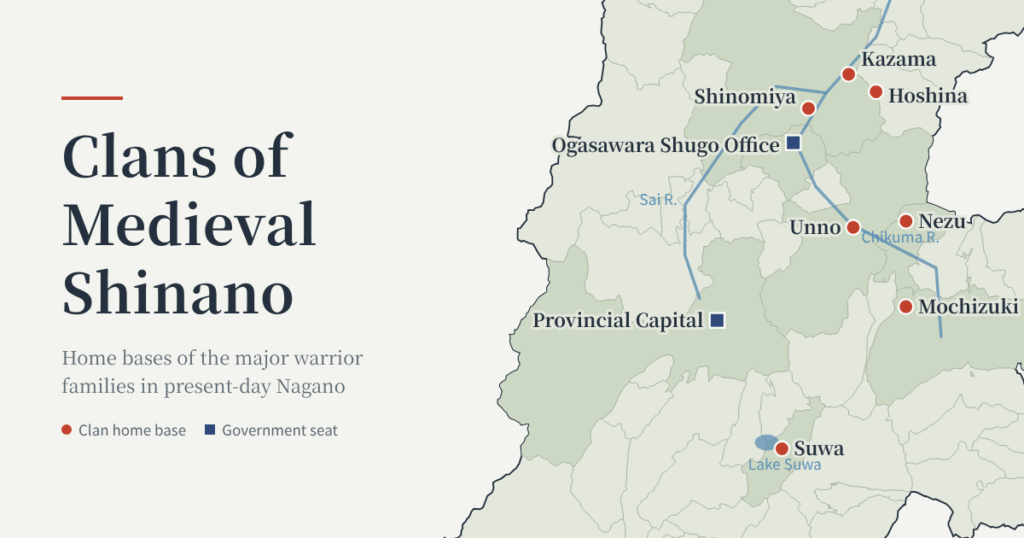
Short answer first, because that is probably why you are here. Kazama Genba, Nezu Kamuro and Mochizuki Ayako are invented. No document records any of them. But the families they belong to — the Kazama, the Nezu and the Mochizuki — were real, and all three stood with Hōjō Tokiyuki, or stood close enough that the fiction is a reasonable one. So the characters are made up. Their placement is not. That is the easy part. The harder and more…
-
Why Did Godaiin Muneshige Sell His Own Nephew? ― Seven Days in a Fallen City “The Elusive Samurai”
If you found this page after watching or reading The Elusive Samurai, you already know the name Godaiin Muneshige. You probably also know the verdict that comes attached to it: scum, monster, the worst man in the story. I understand the reaction. He betrayed a nine-year-old boy who had been placed in his care by a dying father — and that boy was his own sister’s son. But I have spent a long time with this episode now, and I…
-
Who Was Ogasawara Sadamune? The Archer from The Elusive Samurai — and the Line That Still Rides at Tsurugaoka Hachimangū
If you have watched The Elusive Samurai (Nige Jōzu no Wakagimi), you know him as the antagonist: Ogasawara Sadamune, military governor of Shinano, a supernaturally gifted archer, and a distinctly strange man. If you have ever stood along the sand track at Tsurugaoka Hachimangū in Kamakura on the sixteenth of September and watched a rider in Kamakura-period hunting dress hit three targets at full gallop, you have seen something else entirely. These two things are the same thing. The riding…
-
The Oath That Outlived the House: What “Mihata Tatenashi” Still Does in Yamanashi
I went to the Shingen-ko Festival in Kōfu because of a BBC documentary. The programme was about the fact that the retainer families of the Takeda — a clan destroyed in 1582 — still exist, still know who they are, and still gather. That struck me as worth seeing in person. So in 2026 I went. What I saw there sent me back to rewrite everything I thought I understood about a single sentence. The line A man in Takeda…
-
Ueda in a Day: The Shrine of Oaths, and the Kamakura That Fell in Shinano
A car-free day trip from Tokyo — written for readers who arrived here through The Elusive Samurai. — If you have read The Elusive Samurai, you know how the story begins. Kamakura falls in 1333. A boy of the Hōjō house escapes and runs for Shinano, where a shrine priest called Suwa Yorishige takes him in. Two years later, Shinano rises. Most people who want to walk that story go to Suwa. That is the right instinct, and I have…
-
Suwa Yorishige, the Living Deity of Suwa Grand Shrine — the History Behind The Elusive Samurai
If you have been watching The Elusive Samurai, you have met Suwa Yorishige. He is the strange, laughing man who takes in a hunted eight-year-old boy and announces that this child will one day rule Japan. The manga makes him a prophet. That is fiction. But the real Yorishige was something stranger than a prophet, and the truth is not a softer version of the story — it is a harder one. He was a god. Not metaphorically. Institutionally. What…
-
Scarlet Heart: Why the Fourteenth Prince Lost the Throne
Near the end of Scarlet Heart, the Fourteenth Prince performs a sword dance and then recites a poem — a Song-dynasty lyric about the reckless honour of a young man’s life, remembered from the far side of losing it. A great many viewers have cried at that scene. Underneath it is a simple question. How does a man with that much lose? A hundred thousand troops. His father’s confidence. A faction behind him. Ceremonial honours no other prince in the…
-
Was Hua Fei Real? The History Behind Empresses in the Palace’s First Villain
The first half of Empresses in the Palace belongs to Hua Fei. Arrogant, vicious, monopolising the emperor’s attention, punishing anyone who displeases her. She rules the harem on the strength of her brother’s power at court, and falls when he does. She is the first thing the heroine has to survive. She was based on a real woman. And that woman was, in nearly every particular, her opposite. Lady Nian The historical model was Lady Nian, who died in 1725…
-
Empresses in the Palace: The Blank in the Record
The Real History Behind Lady Ying and the Third Prince In Empresses in the Palace, the Yongzheng Emperor’s third son falls in love with one of his father’s consorts. She refuses him throughout. She is executed anyway, on a charge of having seduced him, and given no chance to speak in her defence. It is one of the cruellest sequences in the series, and it is built almost entirely out of two poems. It is also — and this is…
-
The Real Minghui (Eighth Prince wife) of Scarlet Heart
The Woman Who Never Played the Game: The Real Minghui of Scarlet Heart Empresses in the Palace, Story of Yanxi Palace, Scarlet Heart — these are excellent dramas. The heroines are clever and formidable, and they fight their way up through the imperial harem with real style. But watch enough of them and something starts to press on you. The win condition never changes. Win the emperor’s favour. Bear a son. Rise in rank. However brilliantly a heroine is written,…
-
Was Prince Guo Real? The True History of Yunli Empresses in the Palace
A note before we begin. The doomed romance between Prince Guo and Zhen Huan in Empresses in the Palace is fiction. My articles on the songs “[Hong Yan Jie]” and “[Feng Huang Yu Fei]” are about the beauty of that story. This one is about the man who actually lived. Prince Guo — Aisin Gioro Yunli — was the seventeenth son of the Kangxi Emperor. He was a real person: a scholar and artist by temperament, with little appetite for…
-
The Summer Palace Cixi Built for Herself
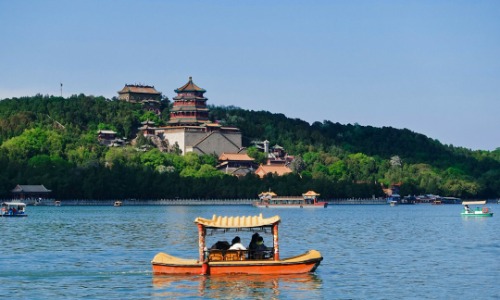
— “They Built a Garden with the Navy’s Money”: Re-examining the Summer Palace and the First Sino-Japanese War Every guide tells you the same thing When I visited the Summer Palace in Beijing, our Japanese-speaking guide told us that this garden was the reason China lost the war against Japan. Walking on, I passed an English-language tour group. Their guide was saying the same thing. The story is told with remarkable consistency: Empress Dowager Cixi diverted the navy’s budget to…