-

Kou Shou (Hou Sheng) The Minister Who Sold Qi Without Lifting a Finger: the “Immobile Traitor” | Kingdom
If you read a*Kingdom*, you already know one kind of traitor by heart: **Guo Kai (Kaku Kai)** of Zhao — the minister who took Qin’s gold, drove out Lian Po, and slandered the great general **Li Mu (Ri Boku)** to his death. Guo Kai is a *moving* villain. He schemes, he acts, he tips his country over the edge with his own two hands. The state of Qi was destroyed by the opposite kind of traitor. His name was **Hou…
-
Kaku Kai in Kingdom: The Real Traitor Who Killed Ri Boku — and How He Died
If you follow Kingdom, you already hate one man on sight: Kaku Kai (Guo Kai), the minister of Zhao who took Qin’s gold, drove out the veteran Ren Pa (Lian Po), and slandered the brilliant 〔Ri Boku (Li Mu)〕 into an executioner’s hands. Zhao held two of the age’s greatest generals — and tore off its own arms. Histories call Guo Kai a bought traitor and leave it there. But I don’t think gold is the whole story. Underneath the…
-
Sei Ou Ken (King Jian of Qi) : How “Peace Addiction” Destroyed the Last Great State | Kingdom
In *Kingdom*, the fall of each state usually comes on the battlefield. But **Qi**, the last of the great eastern states, fell almost without a sword being drawn. Its ruler, **King Jian (Tian Jian)**, sat on a mountain of soldiers and surrendered anyway. This is the story of how forty years of peace, a bribed chancellor, and one seductive idea — *”China will be one, so why prepare for war?”* — destroyed a kingdom from the inside. The Boy King…
-
The Manchu–Mongol Independence Movement and Four Human Beings: Pu Wei, Shanqi, Kawashima Naniwa, and Yoshiko Kawashima
**A note before we begin.** This is not a defense, and it is not an indictment. The Manchu–Mongol Independence Movement was inseparable from Japan’s expansion onto the Asian mainland; from China’s point of view, it was part of an invasion. I do not erase that context. What I want to do here is set the labels down for a moment — “traitor,” “spy,” “puppet” — and return four caricatures to being human beings caught in the collapse of an…
-
Yoshiko Kawashima Beyond “The Last Emperor “: What Her Japanese Hometown Remembers
If you know Yoshiko Kawashima at all, you probably know her from Bernardo Bertolucci’s The Last Emperor — the flamboyant “Eastern Jewel,” a spy in men’s clothing who supplies Empress Wanrong with opium. It is one of cinema’s most memorable villains. I was born in Matsumoto, in Nagano Prefecture, Japan. In Matsumoto, Yoshiko Kawashima is not a movie villain. She is a former local schoolgirl whose grave stands in a quiet temple on the edge of town, and whose memory…
-
Who Was the Real Zhen Huan? The Historical Empress Behind Empresses in the Palace
> *This continues from [The Real Yunli, Prince Guo]. The romance and the revenge in the drama are fiction — but underneath them stands a woman who truly lived.* The Real Woman Behind Zhen Huan Introduction *Empresses in the Palace* (甄嬛伝), which aired in China in 2011, set off a wave that swept across Asia. Its heroine, Zhen Huan, still holds a firm place in viewers’ hearts as a kind of ideal — a woman people return to and admire.…
-
The Songs of Empresses in the Palace & The Legend of Mi Yue Explained
Two of the most beloved Chinese historical dramas — Empresses in the Palace (The Legend of Zhen Huan) and The Legend of Mi Yue — open and close each episode with songs that are far more than background music. In Chinese drama, the theme is a distilled statement of the whole story, and these are some of the finest ever written. Below is a short guide to each: what the song means, and the centuries-old poetry hidden inside it. (Each…
-
“Yi Nian Zhi Zhuo”: The Theme Song of Scarlet Heart — and the Same Longing in Tibet, China, and Japan
> Part of the C-drama song cluster. it explains the song’s meaning rather than reproducing the lyrics. The older poems quoted (the Sixth Dalai Lama’s couplets and a Japanese court poem) are centuries old and freely quotable. — The 2011 Chinese time-travel romance Scarlet Heart (步步惊心, Bù Bù Jīng Xīn; based on Tong Hua’s novel, and known in Japan as Kyūtei Jokan Jakukei) is carried by a duet that aches from its first note: “Yi Nian Zhi Zhuo” (一念执着, “one…
-
“Empresses in the Palace” Theme Song Hongyan Jie: The Doom of Beauty, Explained
A note before we begin. The tragic love between Zhen Huan and Prince Guo shown here is the drama’s fiction. The real Yunli, Prince Guo, was a literary prince loyal to the Yongzheng Emperor, and his romance with Zhen Huan never happened in history (→ [The Real Yunli, Prince Guo]). This piece is about savoring the beauty of that story. “Hongyan Jie” — The Curse of a Beautiful Face A monument of Chinese palace drama: Empresses in the Palace…
-
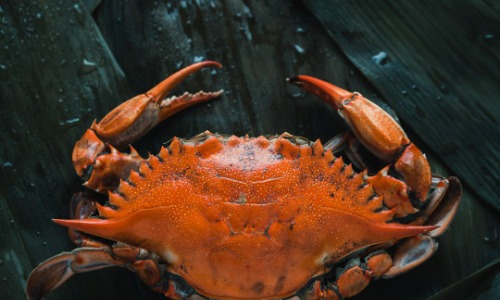
To Be Summoned Is to Be Devoured: The Crab’s Song in the Man’yōshū
> A companion piece to the Late-Qing series. Where the Chinese essays celebrate “being summoned by the Son of Heaven” as the supreme honor, this Japanese poem turns that same summons inside out. — A crab in hiding receives the sovereign’s call Book 16 of the Man’yōshū (Japan’s oldest poetry anthology, eighth century) holds an unforgettable poem, number 3886. Its annotation calls it “a song composed to voice the pain of a crab.” It was performed by hokaibito—the lowest of…
-
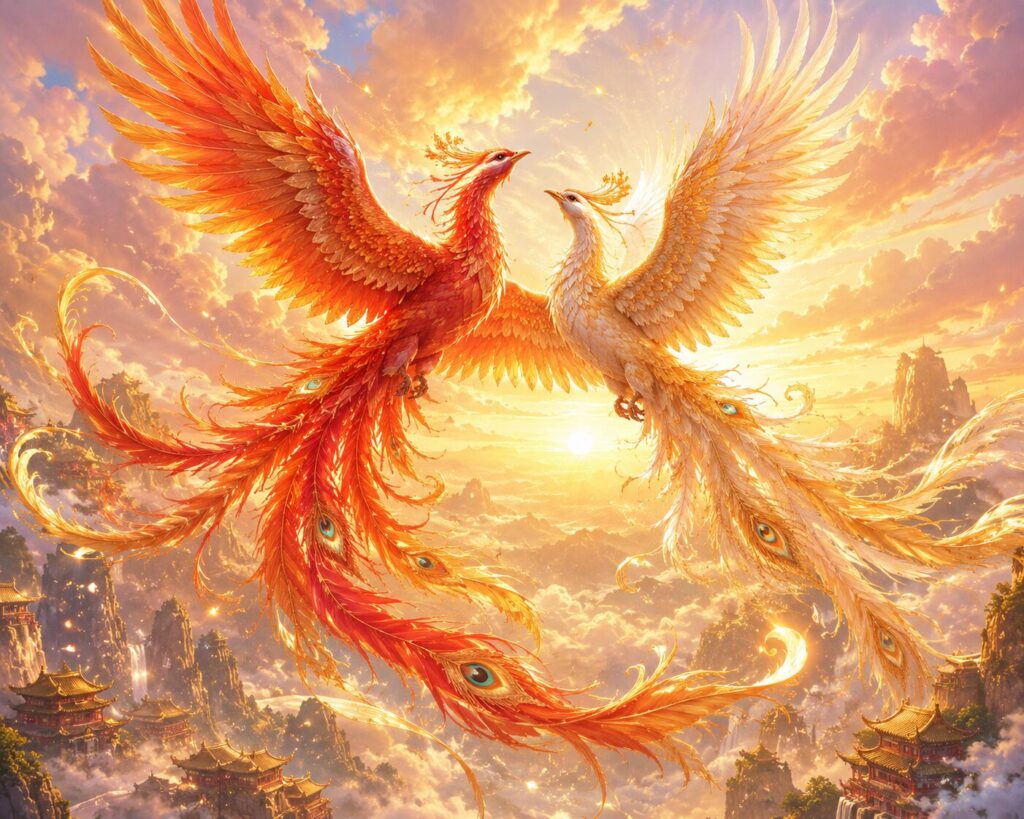
“Feng Huang Yu Fei”: The Ending Song of Empresses in the Palace, Explained
If you’ve watched Empresses in the Palace (the 2011 Chinese palace drama also known as The Legend of Zhen Huan), you’ve heard “Feng Huang Yu Fei” (凤凰于飞) — the haunting closing theme sung by Liu Huan. To me, it isn’t a song about the throne at all. It’s the secret love song of Prince Guo and Zhen Huan. A note for first-time viewers Empresses in the Palace follows Zhen Huan, a young woman who enters the harem of the Yongzheng…
-
The Xianfeng Emperor’s Financial Collapse: Hyperinflation, the Likin Tax, and the Roots of China’s Warlords
> Late Qing Dynasty Series|Emperors The Xianfeng Emperor > Reigned 1851–1861 (10 years) · Born 1831 · Died 1861, age 31 > > ※ This article focuses on the financial and structural collapse of the Qing under the Xianfeng Emperor. For the emperor as a man — the rigged succession, his dependence on the future Cixi — see the companion piece [The Rise of Cixi: How a 25-Year-Old Concubine Came to Rule the Qing]. — “Income could no longer cover expenditure”…