Short answer first, because that is probably why you are here.
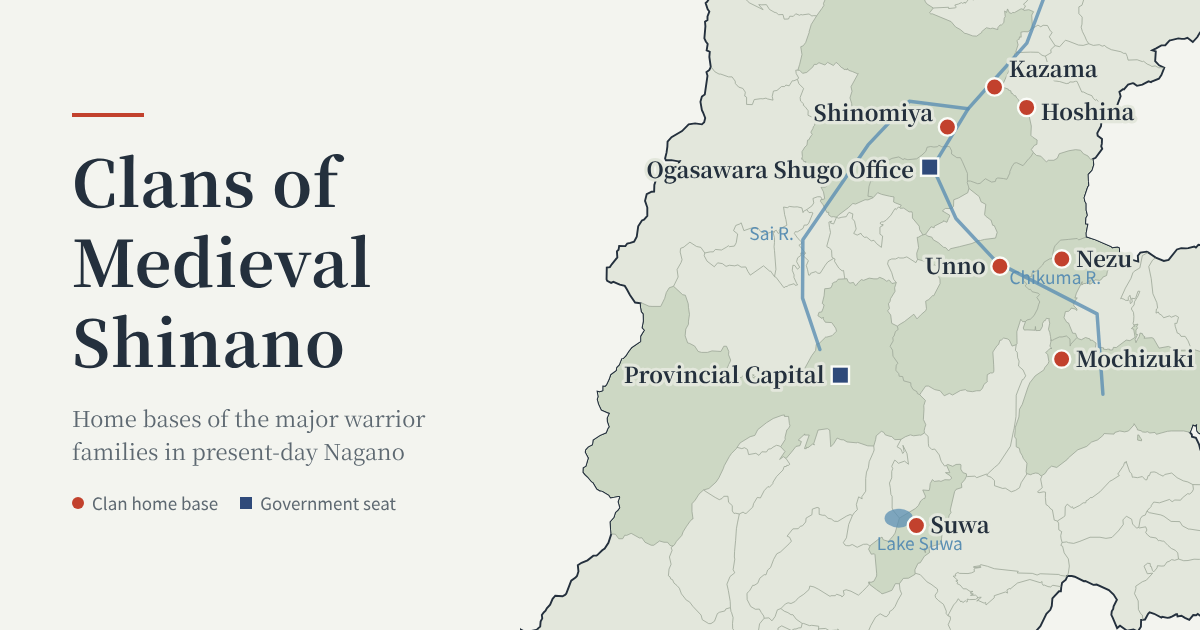
Kazama Genba, Nezu Kamuro and Mochizuki Ayako are invented. No document records any of them. But the families they belong to — the Kazama, the Nezu and the Mochizuki — were real, and all three stood with Hōjō Tokiyuki, or stood close enough that the fiction is a reasonable one.
So the characters are made up. Their placement is not.
That is the easy part. The harder and more interesting part is what those families were doing in the story at all, and it took me a while to see it. It is not about bloodlines. It is about names.
A detour through kabuki
If you have ever looked into kabuki, you may know that actors inherit names. A performer becomes Danjūrō, or Kikugorō, and the name passes down a line that is not necessarily a bloodline. Adopted sons inherit. Disciples inherit. A biological son who is not good enough does not.
And the transfer is not private. There is a ceremony — the shūmei, the name-taking. The actor sits on stage before an audience, states the name, and accepts it in public.
That ceremony is the key to this whole article, and it is seven hundred years older than kabuki.
What a “house” was
Before going further I need to define a word, because the English ones do not fit.
The Japanese ie is usually translated as “family” or “clan.” Both are misleading. An ie was not primarily a group of relatives. It was a continuing entity that held a name, a set of duties, ritual obligations, and land. Think of it less as a bloodline and more as a noble house in the European sense — or, closer still, as one of those kabuki acting names.
This has a consequence that sounds strange at first: a house could continue through adopted sons, through secondary sons, through people with no blood connection at all — as long as someone took the name and carried the duties. And a house could end while blood relatives were still alive, if none of them took it up.
Keep that in mind. Everything below turns on it.
Tokiyuki was supposed to become a side branch
The manga leaves the Hōjō succession open. History does not.
Tokiyuki had an elder brother, Kunitoki, born in 1325. When their father Takatoki stepped down as regent, Kunitoki was two years old — too young to take the office, which passed to Kanazawa Sadaaki and then Akahashi Moritoki. But the heir of the main Hōjō line was Kunitoki.
In the fifth month of 1333, when Kamakura fell, Kunitoki was betrayed by his own uncle, Godaiin Muneshige, captured and killed. He was nine.
One detail matters here. Kunitoki’s mother was Muneshige’s sister — a concubine, not Takatoki’s principal wife. Kunitoki was not born of the main wife either. He was made the heir anyway.
Which tells us that “heir” and “secondary son” were not determined by birth. The house decided.
And if Kunitoki had lived to inherit, Tokiyuki would have been given a branch of his own and become the founder of a cadet line. That is where the Nagoe, the Gokuraku-ji, the Kanazawa and the Akahashi branches of the Hōjō all came from. Tokiyuki was slated to be the next one.
What actually happened was the reverse. The heir died, and the boy who was meant to become a side branch survived and carried the name.
✦ Satoe’s Take
This is where I think his persistence comes from. He took up the Hōjō name, and once you take it up, you cannot step down. Surviving quietly would have meant abandoning the name.
And once you notice that, you notice that everyone who gathers around him is standing in the same place.
Kazama Genba — a house that kept its duties
There is no Kazama Genba in the sources. But the Kazama were real, based in Kazama-gō in Minochi district, northern Shinano — today part of Nagano City.
Their first appearance in writing is 1449, when Kazama-gō was assigned the office of tōyaku for the Misayama festival of Suwa Grand Shrine’s Upper Shrine. Kazama Aki-no-kami Mitsusada then served in that office twice, in 1461 and 1468.
The tōyaku was not an honor so much as a burden: the holder underwrote the festival’s costs and supplied its personnel. Taking it on repeatedly meant the Kazama were embedded in the Upper Shrine’s ritual organization — in other words, that they belonged to the Suwa shrine network.
Continuing as a house meant continuing to shoulder things like this.
✦ Satoe’s Take
One caution. All of this evidence is fifteenth-century, more than a hundred years after the Nakasendai Rebellion of 1335. I have not yet found a document proving the Kazama were part of the Suwa network in 1335 itself. Genba’s presence beside Tokiyuki is a reasonable invention based on what the house was, not a documented fact.
Nezu Kamuro — the cloth, and the act of wrapping it
Kamuro is invented too. But the Taiheiki and related sources record that the Shigeno confederation joined Suwa Yorishige’s side in 1335. The Shigeno were three houses: the Unno, the Mochizuki and the Nezu.
The Nezu were based in Nezu-gō, Chiisagata district, eastern Shinano — today Tōmi City, where the remains of their fortified residence can still be visited.
The crescent cloth
In the manga, the head of the Nezu house hands Kamuro a cloth bearing a moon crest. It is the family crest.
Kamuro is illegitimate — the child of a Hōjō lord, treated as not really a Nezu at all. Handing him the crest means he has been recognized as one.
When I saw this scene I thought: someone did their homework. The entire meaning is carried by the transfer of a crest. Nothing is explained in dialogue.
And the detail holds up. The crests of all three Shigeno houses are said to derive from the moon — the Unno used a moon-ring with nine stars, the Mochizuki a nine-star crest signifying the full moon (mochizuki means full moon), and the Nezu a moon within a circle. There is a reason the cloth around Kamuro’s head is a crescent.
But here is what I think actually makes the scene work. It is not that he is given the cloth. It is that he wraps it around his head in front of everyone.
Being recognized and declaring yourself recognized are two different acts. The first is done by the house. The second is done by you. Given how much weight a warrior’s name and crest carried, riding out with that crest on your head — while the others half-mock you for it — takes a particular kind of nerve.
In that moment, he took the name.
What became of the Nezu
The Nezu went on losing. They were on the Suwa and Hōjō side in the fourteenth century, and in the sixteenth they submitted to the Takeda, whose destruction followed. In 1567 they were among the Shinano vassals who submitted written oaths to Ikushima Tarushima Shrine in Ueda.
I have been to that shrine. Photography is not permitted, so I have no pictures, but standing there knowing those oaths are still held in the building is its own kind of experience.
After the Takeda fell, the Nezu served the Tokugawa. They were known as a falconry house, and that skill connected them to Tokugawa hawking. They survived the Edo period as direct retainers of the shogunate. They lost, repeatedly, and the name continued.
Mochizuki Ayako — the woman who received in her own name
Ayako does not appear in the records either. She is written as an illegitimate daughter of Mochizuki Shigenobu.
In the manga she says she means to become like Tomoe Gozen — which is also where the superhuman strength presumably comes from. Tomoe was a retainer of Kiso Yoshinaka, involved in strategy as well as fighting. For women from Nagano she is a particular kind of name to invoke.
The Mochizuki, though, were real, and so was Shigenobu. Their base was Mochizuki in Saku district, now part of Saku City.
In 1335 Shigenobu rose with the Suwa, the Unno and the Nezu in support of Tokiyuki. But on the first day of the eighth month, while he was encamped at Kamakura, his home castle was taken by forces under Ogasawara Sadamune, the shogunal governor of Shinano. (The attack is recorded in the Ichikawa documents.) The house is usually said to have declined sharply afterward, though some accounts have the castle rebuilt and the family holding on.
Following the name “Himeyasa”
Ayako’s byname in the manga is Himeyasa. So I looked that up.
Mochizuki Himeyasa was a real person. She belonged to a cadet branch of the Mochizuki, and in the tenth month of 1333 she had her landholdings confirmed by the provincial governor of Shinano, a certain Kiyohara, under the new imperial government. (The manga’s Ayako is written as Shigenobu’s daughter; the historical Himeyasa is recorded as the daughter of Mochizuki Shigenao, a different line.)
The main house was destroyed for backing Tokiyuki. Himeyasa kept her land. The usual reading is that she simply did not join them — and indeed, in the Kenmu disturbance of 1336 she supported the Ashikaga.
The relevant documents survive in the Usuda family papers, held by an old family in Ibaraki Prefecture. They are valuable evidence for inheritance practice and for the genealogy of the Suwa shrine network.
A name received at a shrine
There is one more thing about Himeyasa, and it is the piece that pulled this article together.
She was an adoptive child — a yūshi — of the Ōhōri of Suwa Upper Shrine, the living vessel of the Suwa deity. Through that relationship she held the religious rank of Miwa-shi, “one of the divine lineage,” and was also called Miwa-no-ujime. She is the last member of the Mochizuki whose Miwa-shi status is securely attested.
A yūshi relationship was a fictive parent-child bond, created specifically to transmit status and a name. Not blood. Ceremony.
So Himeyasa, too, was someone who was given a name. And the place where it happened was Suwa Grand Shrine.
✦ Satoe’s Take
The 1333 confirmation of her lands is not made out to “the wife of someone from the Mochizuki.” It is made out to her.
She chose differently from the main house. What that cost her, the documents do not say. But she was someone who bore a name of her own and received in it.
Kamuro was handed a crest and wrapped it around his head in public. Himeyasa was given the divine name at Suwa and signed for her land in it. Different methods. But both of them stood outside the center of their house, and both took the name anyway.
The three houses at a glance
| Base | In 1335 | Afterward | |
|---|---|---|---|
| Kazama | Kazama-gō, Minochi district (Nagano City) | No direct evidence; Suwa shrine network | Held Upper Shrine festival office in the 15th c. |
| Nezu | Nezu-gō, Chiisagata district (Tōmi City) | With Suwa Yorishige as part of the Shigeno | Takeda vassals → Tokugawa bannermen (falconry house) |
| Mochizuki | Mochizuki, Saku district (Saku City) | Shigenobu rose; castle fell | Main line broken; Himeyasa’s branch kept its land |
Receiving a name is not the same as taking one
Now the part that I think matters most, and that the quest-story reading tends to miss.
Consider Ogasawara Sadamune, the man who took the Mochizuki castle.
The Sada in Sadamune was a character granted to him by Hōjō Sadatoki. The mune in his father Munenaga’s name is thought to have come the same way, from Hōjō Tokimune. Two generations of Ogasawara lords carrying characters given by the Hōjō.
During the Genkō war, Sadamune fought for the shogunate, taking part in the attacks on Akasaka and Chihaya. When Ashikaga Takauji turned against Kamakura, Sadamune turned with him and joined Nitta Yoshisada’s assault on the city. For his service he was made governor of Shinano and given former Hōjō holdings in Iga-ra estate.
A house that had been given its name by the Hōjō helped destroy the Hōjō and received their land as the reward.
✦ Satoe’s Take
Here is the distinction this whole article has been circling.
Being given a name is not the same as taking one.
Giving is the giver’s act. The person receiving simply receives; nothing is required of them. Declaring a name is the declarer’s act. The moment you say it in front of others, you have accepted everything attached to it. The commitment exists only on that side.
Sadamune kept his name all his life. After the Hōjō were gone, after he became the Ashikaga’s governor of Shinano, he still carried the character Sadatoki had given him. He never gave it back.
To be clear, this is not an accusation. Changing sides was ordinary, and often necessary, for a warrior of that period. Sadamune fought well and governed Shinano well.
It is only that being given a name does not mean you have shouldered anything.
Kamuro wrapped the cloth around his own head. Himeyasa signed in her own name. Tokiyuki carried the Hōjō name for thirty years and kept coming back.
The boy who never ran
Finally, the title.
The Elusive Samurai — and yet, from the moment he accepted being a son of the Hōjō, Tokiyuki never actually ran.
Fleeing was a tactic. A way of staying alive, not a way of living. He escaped Kamakura, took refuge in Suwa, was defeated and rose again. Each time, he came back. For nearly thirty years he kept coming back, when there were countless opportunities to stop.
Meanwhile, the people who betrayed him were always close to home. Godaiin Muneshige, who sold his brother, was the brother of Takatoki’s concubine — as close to the Hōjō, and as indebted to them, as anyone could be, and he handed over a nine-year-old. The Taiheiki has it that Muneshige himself was afterward taken in by no one and died with nowhere to go.
Blood betrayed him. Obligation betrayed him. And he betrayed no one.
Seven hundred years later, I think that is why this boy is loved. Not because he was strong, and not because he was clever. Because he kept coming back, and never once turned on anyone.
He was not rewarded. He is said to have entered Kamakura three times and held it none of them. The Hōjō were never restored; no institution and no landholding survives in his name. Which is why he was, for centuries, barely mentioned in Japanese history at all. History records those who achieve things.
He was also out of step with his age. The Kamakura shogunate was finished. What he was trying to take back was a world that had already ended. To his contemporaries he must have looked like a boy clinging to a losing, outdated side.
And still he did not change. Forgotten, left behind by his own century, he held to what he had taken up. That constancy is the only thing he left behind.
Seven hundred years later, that is the part people love.
The one who never ran is the one we call elusive. That is how I read the title.
A closing note
After finishing this, something occurred to me.
In kabuki and in rakugo, names are inherited by people who are not necessarily blood relatives. The one who inherits the art inherits the name — which is why a non-biological successor can take it, and why a biological son who lacks the ability cannot.
And the inheritance comes with a ceremony. A formal address, the curtain rising, the new name declared in front of everyone. Recognition by the house is not enough. The name only moves when the person accepts it in public.
I suspect that what a boy did seven hundred years ago, wrapping a crescent cloth around his head and riding out where everyone could see him, was the same thing.