-

Prince Su Shanqi Yoshiko Kawashima’s Father: The Qing Prince Who Chose Japan and Paid the Price
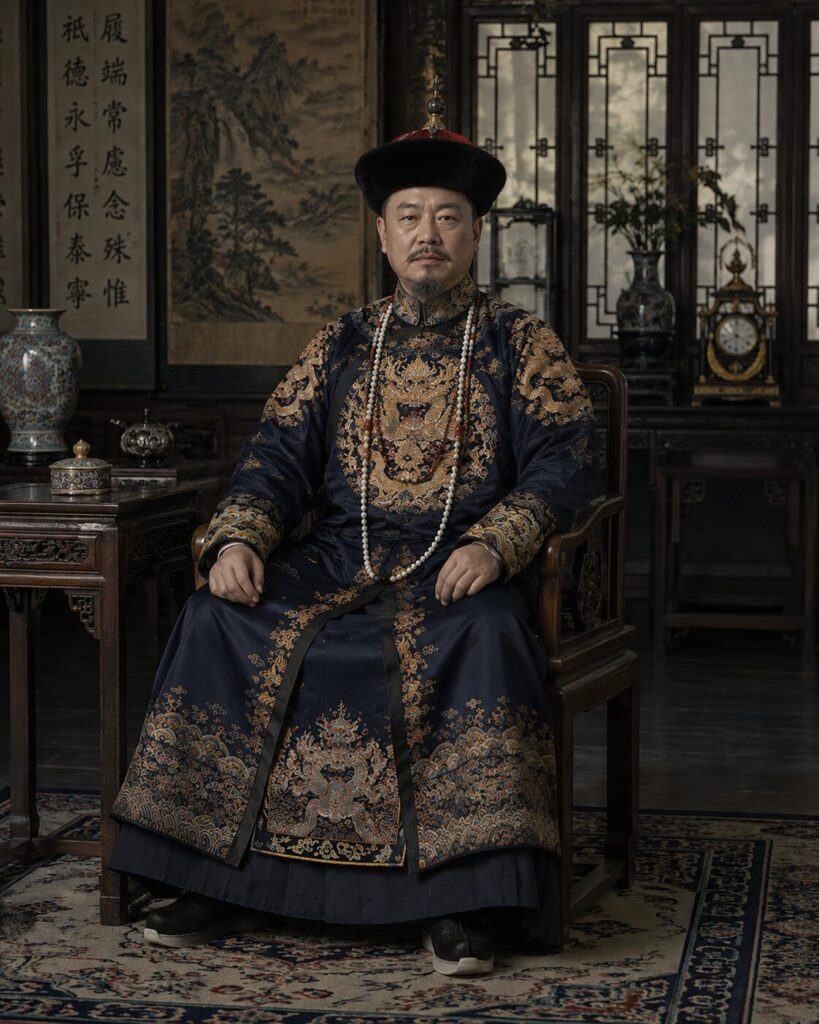
Late Qing Dynasty Series | The Prince Su Family Prince Su Shanqi A Qing Prince, a Japanese Samurai’s Son, and the Dream That Outlasted an Empire In 1900, as allied Western forces threatened to shell the Forbidden City, a single Japanese man talked them out of it — in Chinese. His name was Kawashima Naniwa, and he was the son of a former samurai from a small Japanese castle town called Matsumoto. A year later, that same man became the…
-
The Fengshan Ritual: China’s Supreme Ceremony of Heaven and Earth
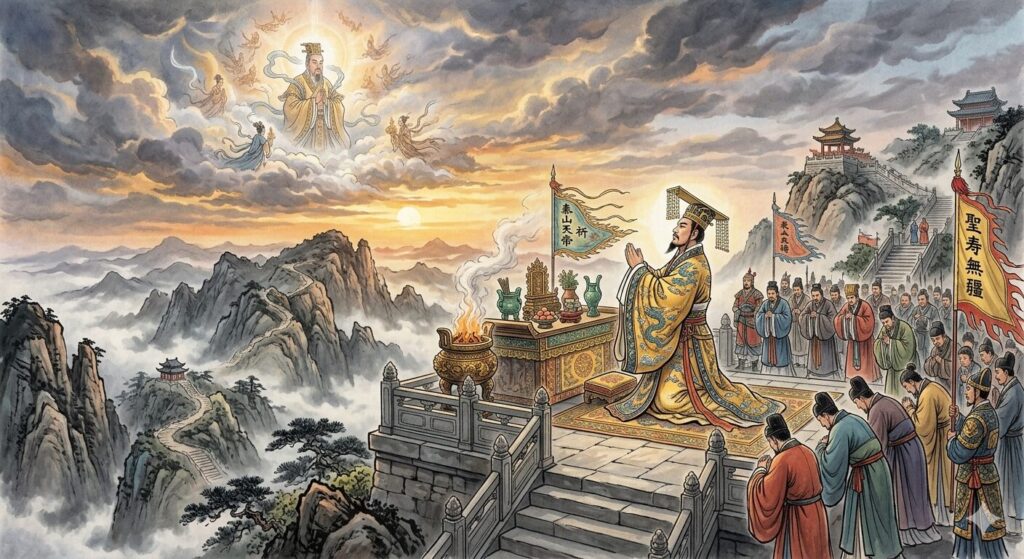
The Fengshan Ritual: China’s Supreme Ceremony of Heaven and Earth Only the Son of Heaven Could Perform It — From the First Emperor to the Song Dynasty A Hierarchy of the Sacred: Who Could Worship What To a reader shaped by Christianity or other Western religious traditions, this may seem deeply strange. In those traditions, prayer is available to everyone — the poorest farmer and the most powerful king kneel before the same God, and no earthly rank determines one’s…
-
Tongzhi Emperor: Cixi’s Son Who Died at 18 — Smallpox or Syphilis? The Tragedy of Empress Alute
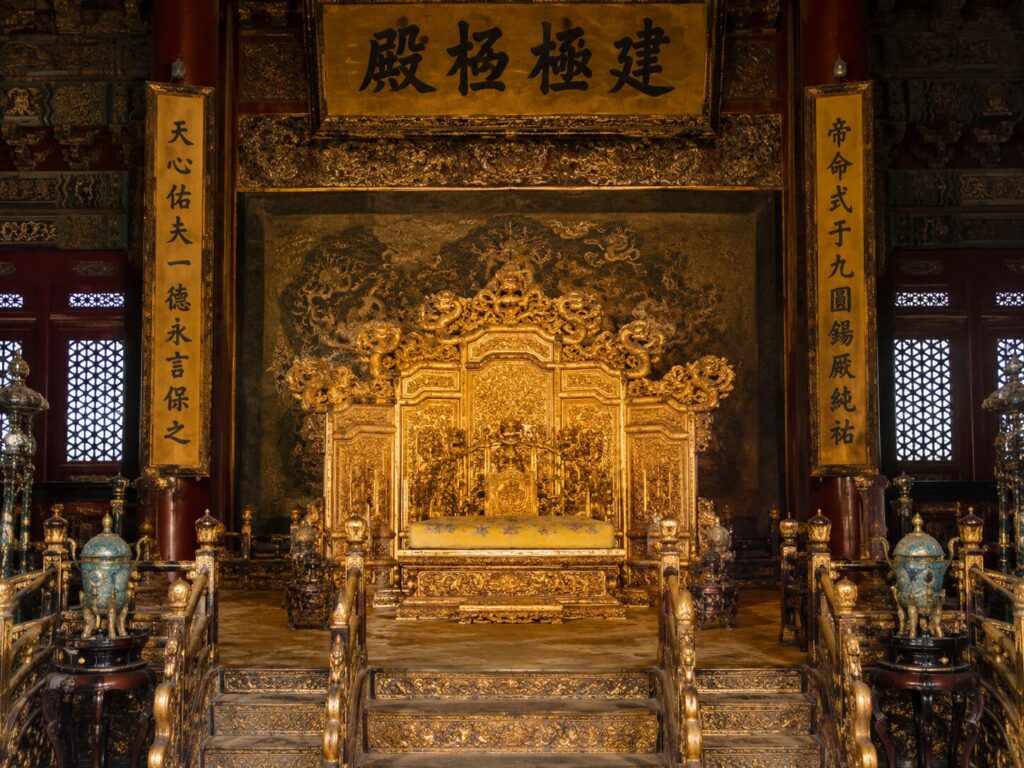
The boy named “joint rule” who was never let in. The Tongzhi Emperor (1856–1875) was the son of Empress Dowager Cixi and the ninth emperor of the Qing dynasty. He took the throne at five, ruled in person for less than two years, and died at 18 — of smallpox, according to his own physicians, though a darker rumor of syphilis has followed him ever since. His era name, Tongzhi (同治), means “joint rule.” The power was indeed shared —…
-
Empress Dowager Longyu: The Woman Who Ended 2,000 Years of Imperial China
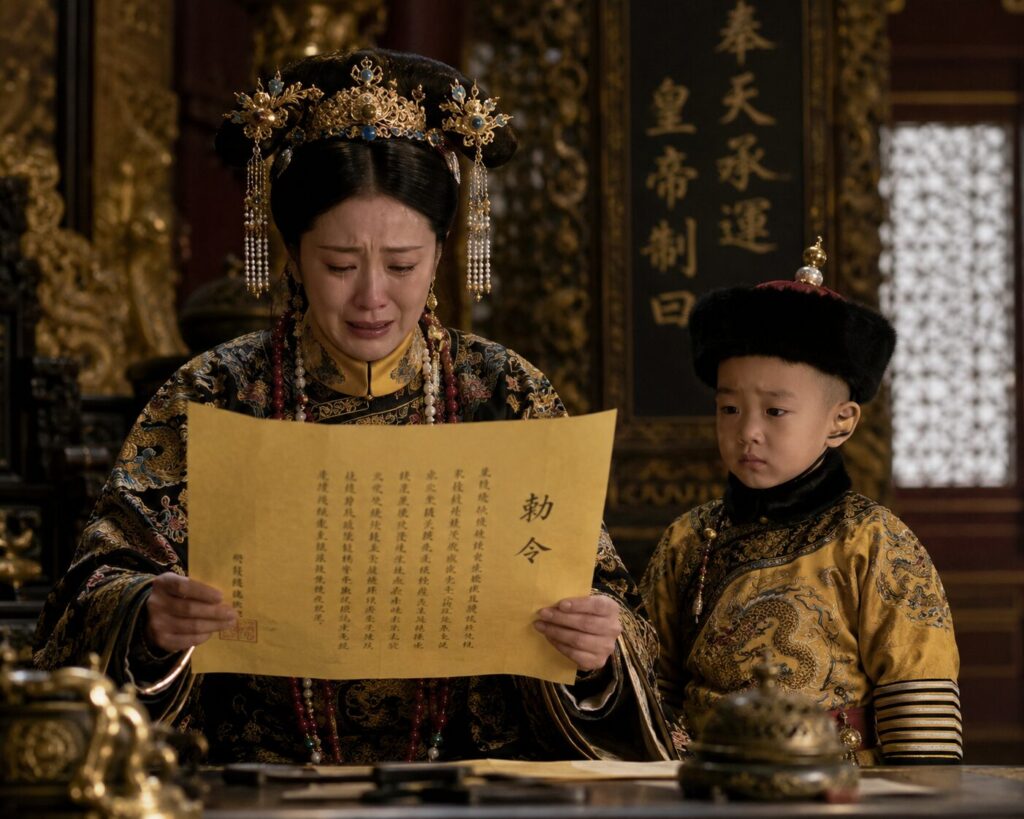
She has been remembered as a jealous, dull-witted, unattractive empress — the woman who lost her husband to a prettier rival and then lost a dynasty. But was that really who she was? A small glass-topped table I once saw at the Summer Palace in Beijing made me wonder. On February 12, 1912, in the name of the six-year-old emperor Puyi, an edict of abdication was issued. With it, more than two thousand years of imperial rule in China —…
-
The Guangxu Emperor: The 103-Day Revolution That Failed Imprisoned Poisoned by Cixi
The Guangxu Emperor: The Emperor Who Said He Didn’t Need Power Imprisoned by Cixi, possibly poisoned — yet Guangxu never broke. He launched 103 days of reform to save China. The emperor who chose mission over power.The Guangxu Emperor and the 103-Day Revolution That Failed Late Qing Dynasty Series “If it would save the country, I do not need to hold power.” No emperor in Chinese history was supposed to say this. Princes fought and bled for the throne. Empress…
-
Lü Buwei (Ryo Fui in Kingdom): The Merchant Who Bought a King — and Lost Everything
If you know Kingdom, you know Ryo Fui — the chancellor who nearly rivaled the young king Ei Sei. He was real. Lü Buwei (Lu Buwei) began as a merchant in Handan, bought a forgotten hostage prince as a “rare asset worth hoarding,” made him king of Qin, and became the most powerful man in the state. Then the boy he had guarded grew up into the First Emperor — and destroyed him. In the article on 〔Bu coins (the…
-
The Light and Shadow of History – Kodaira Soji and the Final Days of the Qing Dynasty
The Light and Shadow of History History is often told from the perspective of the victors. In modern Chinese history after the Xinhai Revolution, while Miyazaki Toten, who supported Sun Yat-sen’s revolutionary movement, is widely known, the stories of those who remained loyal to the Qing Dynasty are rarely told. Today, we introduce the life of Kodaira Soji, a figure hidden in the “shadows of history.” Devotion to the Qing Dynasty Born in 1876 in Hotaka Village (present-day Azumino City),…
-
The last Empress’s Escape – Between Fact and History
Organizing the Facts On the night of November 10, 1931, Puyi escaped from Tianjin and arrived in Yingkou on the 13th, heading toward Manchukuo. Sixteen days after Puyi’s departure, on November 26, an escape operation for Empress Wanrong was executed. The Operation Team – Planner: Yoshida Chutaro, translator for the Tianjin Garrison – Accompanying members: – Kawashima Yoshiko – Mrs. Yoshida Chutaro – Wanrong’s brother – Imperial eunuch – Lady-in-waiting – Japanese Army Colonel The Moment of Decision About ten…
-
Why was Puyi given special protection?
Why was Puyi given special protection? After the founding of the People’s Republic of China, the privileges of the imperial family and aristocracy during the Qing Dynasty were supposed to have been completely denied, restoration of honor and special protection were given to Emperor Puyi and the mellow imperial family. Why is that? Sun Yat-sen’s “Republic of the Five Tribes” In the early stages, the revolutionaries adopted an extreme Manchurianism that regarded the entire Manchu tribe as the enemy and…
-
“SHOGUN – A Story Hidden in the Tea Room” ~Japanese Cultural Depths in an Emmy Award-Winning Series~
Excellence in Visual Expression This work features exquisitely refined imagery and Japanese dialogue, conveying deep cultural meanings that cannot be fully captured through English subtitles alone. Through the traditional Japanese tea ceremony, it masterfully expresses the complex psychology of two characters. The Significance of the Tea Room Space The path to the tea room is carefully depicted in the visuals: – Stepping stones: A bridge to the sacred world – Tsukubai (washing basin): A ritual place for cleansing hands and…
-
The Evolution of Japanese Writing: From Chinese Characters to a Unique System
Writing has played a crucial role in preserving Japan’s rich cultural heritage. Let’s explore how Japan developed its distinctive writing system and literary traditions. The Beginning: A Culture Without Writing Before developing their writing system, Japanese society relied entirely on oral tradition. Skilled storytellers passed down important legends and cultural stories from generation to generation, keeping their history alive through spoken word. The Chinese Influence When Japan began establishing connections with mainland China, they made a significant cultural borrowing: the…
-
Samoa’s Road to Independence: The Role of New Zealand and the United Nations
In 1936, a Labour government was formed in New Zealand, and the new Prime Minister, Michael Joseph, promised to improve relations with Samoa. The new government reviewed several rules and laws, including establishing Samoan associate judges in the courts and hiring Samoans and local Europeans in the public sector. They also set up a registry office to recognize land rights. In 1947, Samoan leaders sent a letter to the United Nations asking for autonomy. The UN sent a delegation to…