2026
-

Was Prince Guo Real? The True History of Yunli Empresses in the Palace
A note before we begin. The doomed romance between Prince Guo and Zhen Huan in Empresses in the Palace is fiction. My articles on the songs “[Hong Yan Jie]” and “[Feng Huang Yu Fei]” are about the beauty of that story. This one is about the man who actually lived. Prince Guo — Aisin Gioro Yunli — was the seventeenth son of the Kangxi Emperor. He was a real person: a scholar and artist by temperament, with little appetite for…
-
The Summer Palace Cixi Built for Herself
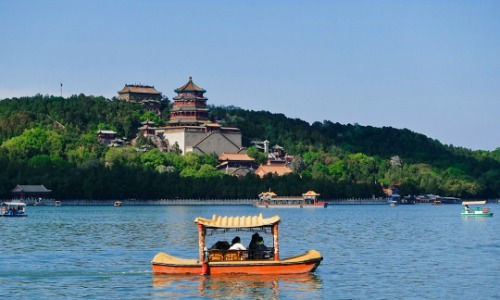
— “They Built a Garden with the Navy’s Money”: Re-examining the Summer Palace and the First Sino-Japanese War Every guide tells you the same thing When I visited the Summer Palace in Beijing, our Japanese-speaking guide told us that this garden was the reason China lost the war against Japan. Walking on, I passed an English-language tour group. Their guide was saying the same thing. The story is told with remarkable consistency: Empress Dowager Cixi diverted the navy’s budget to…
-
Shen Meizhuang: Better to Die on the Branch, Holding Its Fragrance | Empresses in the Palace
Born beautiful, and for that very reason, drawn into the power struggles of the imperial court. Most of the women who entered the inner palace were daughters of good families, raised with learning and refinement. Yet they were thrown into a contest of life and death. When not only your own life but the fate of your whole clan hangs in the balance, no one can remain simply a good person. Caught in the whirlpool of power, do they not,…
-
Gold Leaf (茶金) True Story: The Chiang A-hsin Family and Filial Piety Without Blood
“Smoke Opium and Stay Quiet”: The Jiang Family of Gold Leaf, and Filial Piety Without Blood Introduction The Taiwanese drama Gold Leaf (茶金, 2021) takes its inspiration from a real tea merchant: Jiang Axin (also spelled Chiang A-hsin or Jiang A-sin; 姜阿新, 1901–1982) of Beipu, Hsinchu. But you cannot tell this family’s story with Jiang Axin alone. Put his father and his daughter’s husband beside him, and a shape appears. None of the three was born a Jiang. All three…
-
Huanbi Wasn’t a Schemer — She Was a Daughter | Empresses in the Palace
The Lesser Jade: Huanbi, the Hidden Sister of Empresses in the Palace This is the companion piece promised in “[The Real Prince Guo (Yunli)]” — a look at the historical model behind Huanbi. Her model is Prince Guo’s dijin, his primary consort. And the historical primary consort is said to have come from a family connected to the clan of Zhen Huan’s own model, Empress Xiaoshengxian — or to the line of the Ulanara empress. (Accounts of her clan differ;…
-
Zhen Huan beautiful name meaning Empresses in the Palace
The Chinese historical drama *Empresses in the Palace* (甄嬛伝) won a huge following — and the name of its heroine, “Zhen Huan” (甄嬛), in fact carries a deep literary background and an aesthetic all its own. This time, let’s trace where this beautiful name comes from, back through classical poetry. The image of beauty folded into the surname “Zhen” The surname “Zhen” (甄) calls to mind Zhen Mi (甄宓, zhēn mì), the peerless beauty of the late Han. Zhen Mi…
-
Was Ruyi a Real Person? The True Story Behind Ruyi’s Royal Love in the Palace and the Step Empress
Was Ruyi a Real Person? Short answer Yes. Ruyi is based on a real woman: Lady Nara (1718–1766), the second empress of the Qianlong Emperor, known to history as the Step Empress (继皇后). Her real name was not Ruyi. In 1765 she cut her hair during the emperor’s southern tour, lost his favor, and died the next year — the only Qing empress never given a posthumous title. The same woman also appears as Consort Xian in Story of Yanxi…
-
Why the Tiger Tally Never Came to Japan
Why the Tiger Tally Never Came to Japan This piece continues from [Jade Gui, Bi, and Yue: The Jade Regalia of Rule], where I traced how the yue —the ceremonial axe—stood for the right to move an army. Here I follow that right forward, into the Warring States, where China turned it into something with the opposite logic: the tiger tally. And I follow it as a foreigner, because I am Japanese, and the tiger tally is the one Chinese…
-
Written in the Bone: How the Qing Emperors’ Calligraphy Traced a Dynasty’s Rise and Fall
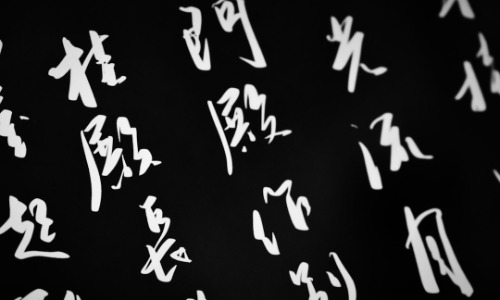
> A note on what this is: an essay built on a single idea — that calligraphy is a portrait of the person who holds the brush — traced across the emperors and princes of the Qing dynasty. It begins with a scroll I saw in Shimonoseki, Japan, and ends with Kawashima Yoshiko’s father. Related pieces: [Li Hongzhang — The Scroll at Shimonoseki], [Prince Su (Shanqi) — The Qing Royal Who Chose Japan], [Kawashima Yoshiko], [Pujie and Saga Hiro —…
-
Four Words That Break What English Does to a Chinese Court — notes from translating a Warring States life
Four Words That Break What English Does to a Chinese Court — notes from translating a Warring States life I spent several weeks writing about a woman who rose from the entertainer households of Handan to become Queen Dowager of Zhao, and then helped destroy the state by having its finest general killed. She died around 228 BCE. History calls her the Chang Consort. Writing her in Japanese was difficult. Writing her in English turned out to be a different…
-
Queen Daochang of Zhao (Lady Chang): The Courtesan Who Brought Down Li Mu — and Was Named for the Floor
Queen Daochang of Zhao (趙悼倡后), also known as Lady Chang or Queen Chang, was the consort of King Daoxiang of Zhao and the mother of King Qian, the last king to rule from Handan. Born into an entertainer household, she rose to Queen Dowager, took Qin’s gold, and helped destroy Li Mu — the general who was Zhao’s last defence. Three months later, Zhao fell. Readers of Kingdom know her as a villain of the Zhao court, and the histories…
-
Zhao Qian (King Youmiu): Was Kingdom’s Last King of Zhao Really a Fool?
This article continues the story begun in “[Posthumous Names],” and stands as one worked example of the series’ opening piece, “[History Is Written by the Victors].” In the manga Kingdom, Zhao Qian appears as the strange, unstable king of Zhao — the state’s very last ruler. The history books dismiss him in a word: benighted, a fool. But read the single poem he is said to have composed in his place of exile, and you find something else: a man…