Chinese Drama: Real History & Songs
-

The Jiaqing Emperor — How Wei Yingluo’s Son Locked the Qing Dynasty into Decline
This article is the starting point of the series on how the Qing dynasty’s “mindset of decline” took shape. The next emperor, who inherited that mindset and lost the Opium War, is covered in “[The Daoguang Emperor — The Miscalculation of Filial Piety],” followed by the Xianfeng Emperor, Empress Dowager Cixi, the Tongzhi Emperor, and the Guangxu Emperor. Late Qing Series | The Emperors Reigned 1796–1820 (25 years) / Born 1760, died 1820 Father: the Qianlong Emperor Mother: Consort Ling…
-
Why the Queen Dowager Outranked the Queen
In English, “Queen Dowager” sounds like a widow with a courtesy title — dignified, senior, and essentially retired. In Warring States China, 太后 (taihou) meant almost the opposite: the head of the entire inner court, ranked above the queen, and very nearly impossible to remove. Get this one word wrong and a whole category of Chinese history stops making sense. Why did women from the humblest backgrounds fight so hard to put a son on the throne? Why could nobody…
-
The Empress’s Clever Strategy in the Inner Palace | The Art of Never Dirtying Your Own Hands in Empresses in the Palace
Who is the most frightening character in the Chinese palace drama Empresses in the Palace (original title: 甄嬛传, The Legend of Zhen Huan)? Many viewers would name Consort Hua, who flies into rages and punishes people openly. But the truly frightening one may be the Empress, who always wears a gentle smile. In this article, I read the Empress’s moves at the time Zhen Huan and the other new candidates enter the palace, through my own interpretation, “Satoe’s Take.” *The…
-
Suiyu Xuan in Empresses in the Palace: Where Was Zhen Huan’s First Home, and What Does Its Name Mean? | The Cruelty of the Inner Palace Begins Before She Even Enters
If you have watched the Chinese palace drama Empresses in the Palace (original title: 甄嬛传, The Legend of Zhen Huan), you probably remember Suiyu Xuan (碎玉轩), the lodging given to Zhen Huan when she first entered the palace. Did Suiyu Xuan really exist in the Forbidden City? And why does it carry such an ominous name, “the Pavilion of Broken Jade”? If we follow the scenes surrounding Suiyu Xuan, we begin to see the quiet terror of the world called…
-
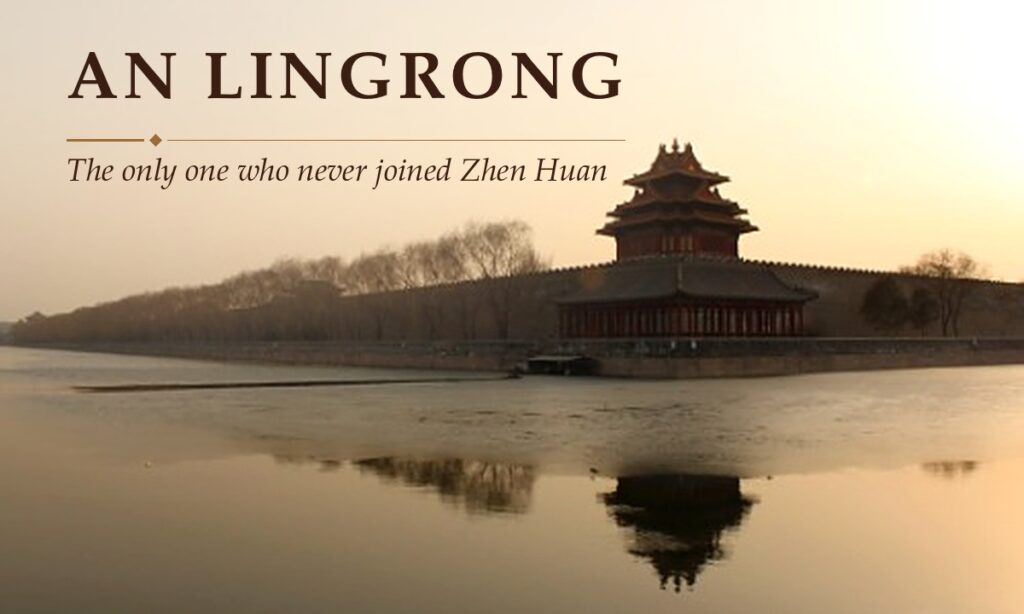
An Lingrong: The Only One Who Never Joined Zhen Huan
Empresses in the Palace character study (The Flowers of the Inner Court / Tragedies Born of the System). A counterpart to “[Concubine Qi]” (raised with too much love): An Lingrong was raised by toxic parents. Like [Shen Meizhuang] and [Huanbi], she found death to be the only way out. An Lingrong: The Only One Who Never Joined Zhen Huan In The Legend of Zhen Huan (known in English as Empresses in the Palace), few characters meet a more hopeless end…
-
Empresses in the Palace: Empress Chunyuan and Yixiu Were Born from One Real Empress — The True Story of Empress Xiaojingxian
Note: In the drama Empresses in the Palace *(Legend of Zhen Huan, 甄嬛伝), neither Empress Chunyuan nor Empress Yixiu actually existed. But behind both of them stands a single real empress: the Yongzheng Emperor’s principal wife, Empress Xiaojingxian (孝敬憲皇后) of the Ula-Nara clan (烏拉那拉氏). The Short Answer: Chunyuan and Yixiu Are the “Light and Shadow” of One Empress Let’s start with the most important point. Empress Chunyuan and Empress Yixiu are both fictional characters created for the drama. However, the…
-
Scarlet Heart: Why the Fourteenth Prince Lost the Throne
Near the end of Scarlet Heart, the Fourteenth Prince performs a sword dance and then recites a poem — a Song-dynasty lyric about the reckless honour of a young man’s life, remembered from the far side of losing it. A great many viewers have cried at that scene. Underneath it is a simple question. How does a man with that much lose? A hundred thousand troops. His father’s confidence. A faction behind him. Ceremonial honours no other prince in the…
-
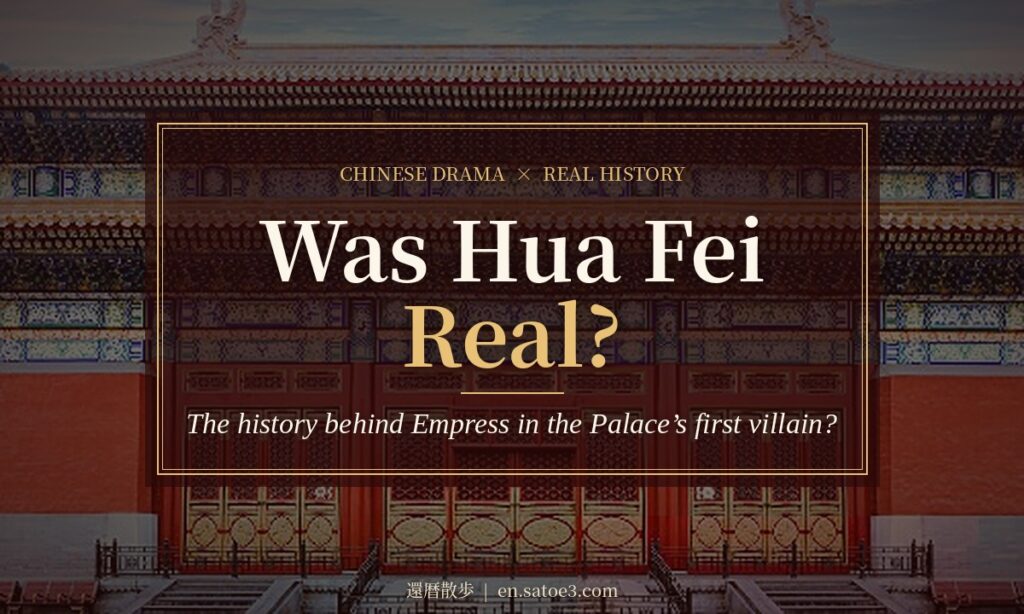
Was Hua Fei Real? The History Behind Empresses in the Palace’s First Villain
The first half of Empresses in the Palace belongs to Hua Fei. Arrogant, vicious, monopolising the emperor’s attention, punishing anyone who displeases her. She rules the harem on the strength of her brother’s power at court, and falls when he does. She is the first thing the heroine has to survive. She was based on a real woman. And that woman was, in nearly every particular, her opposite. Lady Nian The historical model was Lady Nian, who died in 1725…
-
Empresses in the Palace: The Blank in the Record
The Real History Behind Lady Ying and the Third Prince In Empresses in the Palace, the Yongzheng Emperor’s third son falls in love with one of his father’s consorts. She refuses him throughout. She is executed anyway, on a charge of having seduced him, and given no chance to speak in her defence. It is one of the cruellest sequences in the series, and it is built almost entirely out of two poems. It is also — and this is…
-
The Real Minghui (Eighth Prince wife) of Scarlet Heart
The Woman Who Never Played the Game: The Real Minghui of Scarlet Heart Empresses in the Palace, Story of Yanxi Palace, Scarlet Heart — these are excellent dramas. The heroines are clever and formidable, and they fight their way up through the imperial harem with real style. But watch enough of them and something starts to press on you. The win condition never changes. Win the emperor’s favour. Bear a son. Rise in rank. However brilliantly a heroine is written,…
-
Was Prince Guo Real? The True History of Yunli Empresses in the Palace
A note before we begin. The doomed romance between Prince Guo and Zhen Huan in Empresses in the Palace is fiction. My articles on the songs “[Hong Yan Jie]” and “[Feng Huang Yu Fei]” are about the beauty of that story. This one is about the man who actually lived. Prince Guo — Aisin Gioro Yunli — was the seventeenth son of the Kangxi Emperor. He was a real person: a scholar and artist by temperament, with little appetite for…
-
Shen Meizhuang’s Chrysanthemum Poem, Explained Empresses in the Palace
Better to Die on the Branch: the verse she used to answer an emperor The painter who left out the ground Sometime after 1279, a Chinese painter named Zheng Sixiao began producing ink orchids with no soil beneath them. The flowers float. The roots hang in white space. When people asked why, he is said to have answered: the land has been taken — did you not know? The Song dynasty had fallen to the Mongols. Zheng Sixiao, who had…