If you have watched the Chinese palace drama Empresses in the Palace (original title: 甄嬛传, The Legend of Zhen Huan), you probably remember Suiyu Xuan (碎玉轩), the lodging given to Zhen Huan when she first entered the palace.
Did Suiyu Xuan really exist in the Forbidden City? And why does it carry such an ominous name, “the Pavilion of Broken Jade”? If we follow the scenes surrounding Suiyu Xuan, we begin to see the quiet terror of the world called the inner palace.
The Cruelty of the Inner Palace Began at the Selection
As soon as it became clear that Zhen Huan had caught the eye of the Yongzheng Emperor, the first act of cruelty was set in motion. A maid serving the Empress Dowager threw a teacup at Zhen Huan’s feet.
Had she flinched or cried out in surprise, that alone would have been enough to disqualify her as lacking composure. Zhen Huan remained perfectly calm and behaved as if nothing had happened. Another candidate, however, cried out without thinking and was dragged out of the hall on the spot.
✦ Satoe’s Take
No one says, “Get rid of this girl.” A single teacup is broken, nothing more. And yet a young woman’s fate is decided in that moment. Never act directly; arrange things so that the other person fails on her own. This, I believe, is the first form that cruelty takes in the inner palace.
And this cruelty continued, in different forms, after she entered the palace. It began with the lodging she was given: Suiyu Xuan.
Suiyu Xuan Does Not Exist in the Forbidden City
If you visit the Forbidden City (the Palace Museum) looking for Suiyu Xuan, you will not find it. The name was created for the drama.
On the other hand, Consort Hua’s Yikun Palace, Shen Meizhuang‘s Xianfu Palace, and Yongshou Palace, where Zhen Huan later lives, are all real palaces among the Six Western Palaces. Among these real palaces, one fictional “pavilion” has quietly slipped in.
The Six Eastern and Six Western Palaces were independent compounds built in the siheyuan style, each with a walled courtyard, and several consorts usually lived together in one palace. The very fact that Zhen Huan was placed in a mere “pavilion” (xuan), not even a “palace” (gong), shows how weak her position was.
What Kind of Place Is Suiyu Xuan in the Drama?
In the drama, Suiyu Xuan is explained as a place once used when watching performances in the Imperial Garden, a building never meant to be lived in.
It was Consort Hua who sent Zhen Huan there. Jealous of the newcomer whom the Emperor had personally honored with a title, Consort Hua deliberately assigned her to Suiyu Xuan, far from the heart of the inner palace.
Shufang Zhai: A Real Building for Watching Performances
Incidentally, the Forbidden City does have a real building for watching performances: Shufang Zhai (漱芳斋). Its courtyard holds the largest single-story stage in the Palace Museum. However, from the Qianlong Emperor’s reign onward, it was a place where the emperor himself rested, held banquets, and watched plays, not a place for low-ranking consorts. It is also known as the setting of the drama My Fair Princess.
The Ominous Meaning of “Broken Jade”
When Zhen Huan arrives at Suiyu Xuan, the chief eunuch Kang Luhai tells her that there are many pear trees in the back garden.
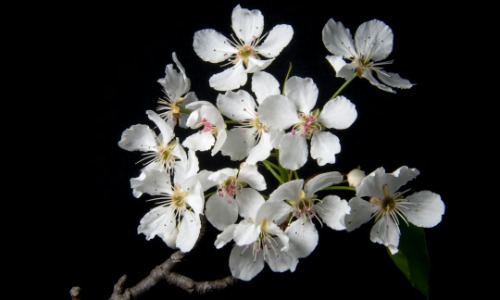
When pear trees are in full bloom, their blossoms are as white as snow, and when they fall, they flutter down like pieces of broken jade dropping to the ground. That scene is where the name “Suiyu Xuan” comes from.
In China, jade is a symbol of nobility and purity. The phrase “broken jade” carries a deeply ominous ring: falling flowers, lost beauty, the end of glory. For the home of a newcomer about to receive the Emperor’s favor, there could hardly be a more ill-omened name.
✦ Satoe’s Take
From the very beginning, Kang Luhai thought that serving Zhen Huan was a losing bet. At the time, Consort Li was the one enjoying the Emperor’s favor, and siding with her was the more profitable choice.
So Kang Luhai, while keeping a perfectly courteous manner, says something ominous to his new mistress. On the surface, it is just a description of the garden. But Zhen Huan feels the coldness behind his words.
Saying something hurtful in polite language. Because he is not openly defying her, the person on the receiving end cannot even reproach him. This scene shows exactly what the veiled sarcasm of the inner palace looks like.
In fact, Kang Luhai later asks to leave Zhen Huan’s service when she falls ill and loses favor, and goes over to Consort Li. I believe his true feelings were already showing in that first courteous remark.
What Was Buried Beneath the Crabapple Tree
The ominous name of Suiyu Xuan eventually came true.
Zhen Huan wondered why the crabapple tree at Suiyu Xuan never bloomed, and discovered a large amount of musk buried at its roots. This musk was the reason the previous resident, Noble Lady Fang, had miscarried.
If I receive the Emperor’s favor, I will be the next target. Realizing this, Zhen Huan asked her childhood friend, the imperial physician Wen Shichu, for help. She pretended to have caught a chill from a fright and avoided being summoned to the Emperor’s bed.
Conclusion: The Cruelty That Slowly Corners You
A teacup thrown at her feet during the selection. A lodging that was not even a “palace.” Kang Luhai’s courteous remark. And musk buried at the roots of a crabapple tree.
None of the cruelty Zhen Huan suffered was open. No one insulted her to her face or raised a hand against her. That is why she could not even protest. Yet this kind of cruelty continued without pause, slowly backing her into a corner.
✦ Satoe’s Take
For a woman living in the inner palace, the Emperor’s favor should be what she wants above all else. And yet Zhen Huan came to feel that she did not want it. I think it was because she understood that receiving his favor would only turn this invisible malice against her even more strongly.
But seen from the side of the women who were already in the inner palace, the story looks completely different. A newcomer whom the Emperor favored enough to grant her a title himself had stepped back of her own accord. Without anyone lifting a finger, they had succeeded in pushing a new rival out of the way.
Perhaps veiled cruelty is not complete when it merely hurts someone. It is complete only when it makes that person withdraw on her own. At least at this point, the malice of the inner palace had won over Zhen Huan.
And on top of this malice lay one more scheme: the Empress’s.
The Empress proposed that Zhen Huan live in Chengqian Palace, close to Yangxin Hall, where the Emperor worked. Placing the Emperor’s new favorite right beside him: the gesture of a good wife who understands her husband’s heart.
But it was only a pretense. Consort Hua, who wanted the Emperor’s favor all to herself, would never quietly allow a newcomer to be placed near him. I believe the Empress had calculated from the start that someone would interfere. Sure enough, Consort Hua objected, and Zhen Huan was sent to Suiyu Xuan.
The Empress had simply shown goodwill as a good wife, and Consort Hua became the villain who drove Zhen Huan into a miserable place. And if the Emperor’s new favorite, frightened by the malice of the inner palace, withdrew on her own, who would benefit the most? Zhen Huan closely resembled the late Empress Chunyuan, whom the Emperor could never forget. With Zhen Huan stepping back, and the blame for the cruelty falling on Consort Hua and those around her, the Empress got exactly the result she wanted without lifting a finger.
How far the Empress foresaw all of this is something I explore in detail in this article:
→ The Empress’s Clever Strategy in the Inner Palace
Zhen Huan was not targeted because she had done anything wrong. She was targeted because she was beautiful and intelligent, because she captured the Emperor’s heart, and above all because she resembled the late Empress Chunyuan.
In the outside world, beauty is a blessing. But in the inner palace, beauty invites jealousy and draws malice. In the inner palace, beauty is not a blessing but a curse.
Looking back, the name “Broken Jade” had been saying this from the very beginning. Jade is a symbol of beauty. And beautiful jade is destined to be broken. On the very day she entered the palace, Zhen Huan was told, through the name of her home, that her beauty was a curse.
By “the inner palace,” I do not mean the buildings inside the Forbidden City.
It is a world that is elegant and refined, where no one ever raises her voice. You never dirty your own hands, and whoever arranges for her rival to stumble on her own is the winner. It is a world where that struggle goes on until death.
The maid who threw the teacup, Kang Luhai with his courteous talk of pear trees, whoever buried the musk, and the Empress who watched it all: perhaps each of them was simply following the rules of this world.
That is why a woman who once enters the inner palace can leave through its gate only when she dies. Even when she goes outside the Forbidden City in attendance on the Emperor, there is rank, there is deference, there is rivalry. Her body may be outside, but she cannot leave this world. Even a woman who carries the curse of beauty cannot escape through this gate.
Is death truly the only way out of the inner palace? Zhen Huan’s first choice, to withdraw from the Emperor’s favor, was an act of resistance to survive. Yet at the same time, it played right into the hands of the inner palace’s rule: win by making others do it themselves. Therein lies the true terror of this world.
And yet, Zhen Huan will one day walk out through the gate of the inner palace while still alive. But that is a story for another article.