A little background first
For readers new to the story: Mi Yue is based on a real historical figure, Queen Dowager Xuan of Qin (宣太后), who lived during China’s Warring States period (roughly 475–221 BCE). She is remembered as the first woman in Chinese history to hold the title of taihou — a queen dowager who ruled as regent. To place her for readers who know one name from this era: she was the great-great-grandmother of Qin Shi Huang, the First Emperor of China (the ruler later associated with the Terracotta Army). Her son, King Zhaoxiang, was the First Emperor’s great-grandfather. In other words, the woman in this song stands four generations before the man who would unify China. The 2015 drama traces her journey from a mistreated palace girl to the most powerful woman of her age. Keep that arc in mind; the song speaks from the far end of it.What kind of song is “Full Moon”?
It’s the opening theme of The Legend of Mi Yue, released in 2015 — a song in the guofeng style, meaning it blends modern composition with a distinctly classical Chinese sound. – Lyrics: Chen Tao (陈涛) – Music: Wang Bei (王备) – Vocals: Chen Sisi (陈思思) Composer Wang Bei wrote not only “Full Moon” but nearly the entire score of Mi Yue. Backed by orchestras such as the China Philharmonic, he layered in solos on ancient instruments like the paixiao (panpipes) and the xun (an egg-shaped clay flute), creating music that feels woven directly into the on-screen images. The singer, Chen Sisi — sometimes called China’s “new folk-song diva” — carries both the sorrow and the dignity of the piece in one clear, supple voice.✦ Satoe’s Take: What is “Full Moon” really about?
From here on, this is my own interpretation. I hear this song as Mi Yue looking back on her life after she has already risen to become Queen Dowager Xuan — a quiet reckoning, sung from the summit. Behind the lyrics, I picture scenes like these: – The mistreatment she endured as a girl in the palace of Chu – The regret of being forced to part from her first love, Huang Xie (黄歇) — who, in history, would go on to become one of the celebrated lords of the era – The power struggles and rivalries with her sisters in the Qin palace at Xianyang She survived all of it and reached a height no woman before her had reached. And yet what waited at the top was a loneliness as complete — and as cold — as a full moon. The glory of the summit, set against the emptiness of the heart: that contrast is, I believe, exactly what the title Full Moon is pointing at.An interpretive reading
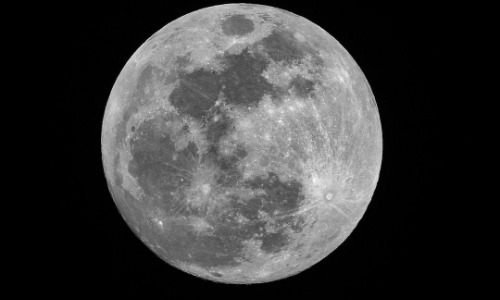
Here is how I’d trace, in my own words, the images the lyrics summon: > All my life I have kept one love hidden away, > walking alone through a world that runs hot and cold. > > The endless wilderness of blowing yellow sand > is a world where human greed and conflict lie bare. > The feelings that well up in me are beyond measure; > grief without end came at me, wave after wave. > Every parting, every farewell — I trace them again, one by one, from the start. > > And so I make a wish to Heaven: > that in the age after me, kin will not be torn apart, > but stay close, side by side. > That love and hatred, returned at last to the earth, may finally find peace. > > Beside that lofty hope, what my heart watches > is the faint, trembling light of a candle. > The wax that melts away is my tears. > Like me — burning myself up for love, > never to meet the one I long for again, > now flickering at the very edge of going out. > > I look up, and the moon is beautiful enough to ache. > The moon is full, yet my heart is missing a piece. > However much I wear myself thin with longing, can I truly never see you? > I put the question to the full moon — > and it only shone down, especially desolate, and cold.Closing thoughts
“Full Moon” is far more than a pretty opening theme. It’s the song of a woman who reached the very height of power, and who hears her own loneliness in the fullness of the moon. Chen Sisi’s clear voice and Wang Bei’s classical melody leave behind an aftertaste that is, as the Chinese reviews put it, sorrowful but never bleak — mournful, and yet noble. → The paired ending theme of The Legend of Mi Yue: “Yiren Rumeng — The Ending Song, and the 2,500-Year-Old Poem Behind It” — This is an analysis of the song’s meaning and background. The full lyrics are copyrighted to their writers; for the original Chinese lyrics, please look to a licensed source such as the official release or streaming platforms. The reading of the song is my interpretation.← Back to the full guide: The Songs of Empresses in the Palace & The Legend of Mi Yue Explained