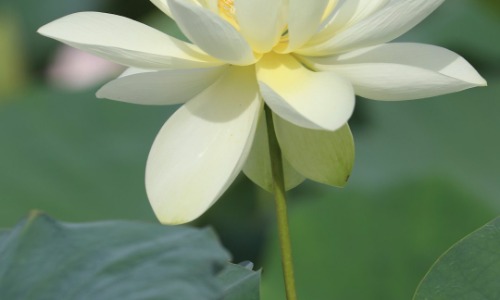
*The “golden lotus steps” scene in the hit drama Story of Yanxi Palace looks like pure invention. But pull on that single thread of fiction and something remarkable happens: almost the entire historical skeleton turns out to be real. What starts as a piece of palace mischief opens straight onto the deepest question in my whole series — what it actually meant to be a conquest dynasty, caught between Han and Manchu, and how that boundary came to be drawn, of all places, on a woman’s feet.*
—
The scene: Wei Yingluo sets a trap
Wei Yingluo, a new palace maid, cannot stand by while an arrogant young noblewoman — in the capital to be vetted as an imperial consort — torments the other servants. So she approaches the girl and offers to teach her “a special art that will delight the Emperor.”
As she touches the noblewoman’s foot, Wei Yingluo notices something forbidden: the feet are bound. The Manchu do not bind their women’s feet, and this girl does. Spotting a small lotus carved into the sole of her shoe, Wei Yingluo leans in and whispers her secret. Fill the carved lotus with rouge powder, she says, and a lotus flower will bloom on the floor with every step you take. They call it the golden lotus walk. The Emperor will be enchanted.
When the girl performs the golden lotus walk before the Qianlong Emperor, he is at first intrigued by the blossoms unfurling across his floor. Then he asks where the trick comes from — and flies into a rage. He orders his eunuchs to examine her feet, and the girl is punished along with her entire clan. Wei Yingluo’s trap has worked perfectly.
It is a delicious little scene. It is also, on its face, exactly the sort of thing you assume a scriptwriter dreamed up. That assumption is where it gets interesting.
What’s real (1): the golden lotus, and the tyrant who invented it
The golden lotus walk is not invented. It comes straight out of the histories.
In the Southern Qi dynasty, an emperor remembered by the demoted title Marquis of Donghun — his name was Xiao Baojuan — had golden lotus flowers laid across the floor for his favorite, Consort Pan (Pan Yu’er), so that she could walk upon them. With each step, another golden lotus seemed to bloom beneath her, and the emperor was captivated. The *History of the Southern Dynasties* preserves the phrase that made the scene famous: *a lotus is born with every step.*
Here is what matters for the drama. Xiao Baojuan is not a neutral name. He is a byword for the stupid, debauched tyrant — the very archetype of the ruler who beggars his realm for a woman’s amusement. In 501 he was assassinated by his own officials, and his dynasty fell with him.
So when the Qianlong Emperor erupts, he is reacting to more than a party trick. Someone has just, in effect, invited him to pose as *that* emperor — to step into the role of the doomed voluptuary whose name is a synonym for a dynasty thrown away. The historical Qianlong was proud, learned, and fiercely conscious of his image. The fury the drama gives him fits the real man exactly.
The twist: Consort Pan’s feet were never bound
There is a lovely wrinkle here, and it is worth slowing down for, because it is the kind of detail that separates knowing a story from understanding it.
Consort Pan’s feet were not bound.
Footbinding did not yet exist in her lifetime. The practice arose roughly five hundred years later, somewhere between the Five Dynasties and the Song (tenth to eleventh centuries). Consort Pan walked across those golden lotuses on small, bare, naturally formed feet. The phrases *a lotus with every step* and *golden lotus* originally praised a beautiful natural foot, and nothing more.
Only after footbinding spread did the meaning slide. “Golden lotus” came to mean the bound foot itself — the *three-inch golden lotus.* And so the drama reaches back for Consort Pan’s story using a much later sense of the phrase. Folded inside a single scene is a five-hundred-year gap in time that almost no viewer ever notices.
What’s real (2): the Manchu ban on footbinding
Now the heart of the scene. *The Manchu forbade footbinding* — and this is completely true. It is also far harsher than most people realize.
Footbinding was a Han Chinese custom, and its reality is worth stating plainly rather than softening. It began when a girl was only four to seven years old, while the bones of her feet were still forming. An older woman of the family, or a hired binder, would fold the four smaller toes under the sole and wrap them tight, then draw the heel and the front of the foot together until the arch itself was forced to break. The toes broke within the first year. Every few days the bindings came off, the feet were washed, and then they were bound again, drawn tighter than before, over and over, for years. The pain was worst at night, and little girls are recorded crying themselves to sleep. The prized result — the three-inch “golden lotus” — was a foot permanently deformed, prone to infection, and never again able to carry a body the way feet are meant to. And families did this to their own daughters for a reason as plain as it was harsh: without a foot small enough, a girl could not expect to marry well, and sometimes could not expect to marry at all. The bound foot was what made her desirable to men, what made her marriageable in the first place. The years of pain were, in the bluntest terms, the price of a husband.
There was a class dimension knotted into this as well. A tightly bound “golden lotus” was, among other things, a sign of means — proof that a family did not need its women out in the fields, because a woman who could barely walk could not do heavy farm labor. So the households that most depended on women’s work were often the ones that could least afford the custom, and the peoples who needed their women mobile — the Hakka of the south, the herders of the steppe — left the feet alone. (By the Qing the practice had in truth seeped down through nearly every layer of Han society, with poorer families often binding more loosely; but the tightly bound ideal never lost its scent of leisure.) It is exactly this logic that set the Manchu apart. A people of the saddle, whose women had to ride, they never took footbinding up. More than that, the Qing banned it, again and again.
In 1638, Hong Taiji (Emperor Taizong), who had proclaimed the Qing dynasty just two years earlier, prohibited “binding the hair and binding the feet.” Under the Shunzhi Emperor, a single violation could cost a woman’s husband or father eighty strokes of the heavy bamboo and banishment of three thousand *li*. The Kangxi reign issued the ban yet again.
The most famous version of all belongs to palace tradition: an edict of the Grand Empress Dowager Xiaozhuang, said to have decreed that anyone who brought a footbound woman into the palace was to be beheaded — a line reportedly carved onto an iron tablet and mounted inside the Shenwu Gate, the northern gate of the Forbidden City. (How much of the iron-tablet story is documented fact and how much is later legend is genuinely hard to pin down; I offer it as tradition, not as gospel.)
Read against all this, the drama’s setup is precise. For a footbound noblewoman to slip into the consort selection at all is no minor breach — in principle it is a capital one. And the Qianlong Emperor’s fury turns out to have two floors, not one. The upper floor is the insult of being cast as a doomed tyrant. The lower, deeper floor is this: a footbound Han foot, a piece of Han custom the Manchu had outlawed on pain of death, has crept into his own harem.
My Reading: the line drawn on a woman’s foot
This is where the question I have been chasing all through the series — *what does it mean to be a conquest dynasty?*, to assimilate into Han culture or to hold yourself apart from it — surfaces, sharply, on a woman’s foot.
The Qing conquerors forced Han men to shave their foreheads and wear the queue. But Han women’s footbinding ran the other way. It was the Han themselves who dug in and preserved it, defiantly, as *a Han thing.* There is even a saying for the asymmetry: *the men submitted, the women did not.* Leaving the foot unbound was a mark of being Manchu; binding it was an act of Han obstinacy.
The Eight Banners, the queue, mounted archery, and the unbound foot — these were all lines the Manchu drew to keep from dissolving into the vast Han sea. (Elsewhere in this series I have looked at the cautionary precedent: the Xianbei of the Northern Wei, who under Emperor Xiaowen assimilated so completely that they melted away and vanished. The Qing were determined not to follow them — and so they drew the line all the way down to the foot.)
Which is why that scene in *Story of Yanxi Palace* is not merely harem spite. A piece of Han assimilation — the bound foot — sneaks into a Manchu harem, and the court moves frantically to root it out. The whole anxiety of the conquest dynasty, its refusal to melt away, is compressed into a single point: a woman’s foot. Wei Yingluo simply took that boundary line and turned it into a weapon against her enemy.
And Wei Yingluo, as it happens, was a real person: the future Consort Ling, posthumously Empress Xiaoyichun, and the mother of the Jiaqing Emperor. And here a second irony opens up.
The real woman came from the *booyi* — the hereditary bondservants who served the imperial house — and, more pointedly, from a Han Chinese booyi family. So in this scene, a Han-born woman of bondservant stock is wielding footbinding, a Han custom the Manchu had outlawed, as a weapon *for* the Manchu court. And she herself would go on to cross that very boundary in the opposite direction: rising by the emperor’s favor to Imperial Noble Consort, her family lifted into a Manchu banner, her surname reshaped into the Manchu-style “Weigiya,” her son ascending the Manchu throne. The woman who turned the Han–Manchu line into a weapon was also the one who crossed it most dramatically of all.
And the one verdict the real Qianlong left on her was a single word: *minhui* — quick-witted, sharp of mind. The histories recorded almost nothing of her character, yet that one word survives. Look again at the golden-lotus trap: to know Consort Pan’s story, to know the Manchu ban, and to see that laying the two together would destroy a rival in a single stroke — that is exactly the *minhui* Qianlong named, performed to perfection by fiction. The one word from the record and the one scene from the drama quietly answer each other.
(The “bondservant to empress” story itself I’ve told in full elsewhere — see *The Booyi System: From Bondservant to Empress* and *The Real Wei Jiashi: Her Three Faces*. Here I only point to it.)
So this scene does not sit off to one side of my Qing series — it runs straight into its backbone.
The golden lotus walk looks like the most obviously manufactured moment in the whole show. Yet behind it stand Consort Pan’s story, the tyrant Xiao Baojuan, and the Manchu ban on footbinding, every one of them real. Pull a single thread of fiction, and at the other end you find the border a dynasty drew between Han and Manchu, running clear down to a woman’s feet. Finding that thread and following it — that is what it means to watch a historical drama deeply.
Afterword: the flowers underfoot, and a 1,500-year-old dream
Let me end with something that caught me off guard, and that ties all of this to the present.
Not long ago in Tokyo I walked through a projection-mapping installation — a garden of light where flowers bloom under your feet as you step and scatter behind you as you pass. Treading on those flowers of light, I suddenly thought of Consort Pan.
Consider what it once took to make flowers bloom beneath your feet as you walked. Fifteen hundred years ago it took a doomed tyrant carpeting the floor in gold for one beloved woman — the outermost limit of earthly extravagance. Now a single ticket lets anyone walk the same path. The old human dream of *a road that blooms at every step* has come down from an emperor’s privilege to a garden of light open to all. Perhaps, over fifteen centuries, the golden lotus walk was quietly democratized.
If this feels familiar, it should — it is the twin of a story I have told before, about the replica Heirloom Seal of the Realm. Once, the “mark of Heaven’s Mandate” belonged to the emperor alone; now it sits on any desk as a trinket costing a few thousand yen. Once, *a lotus with every step* belonged to a single favored consort; now a single ticket makes it bloom under anyone’s feet. Our age takes the “special” that a handful of people once monopolized, gives it a form, and hands it out for everyone to taste — a small kindness offered by the machines of technology and art. Walk across a floor of light, and for a moment anyone can feel a little like the most beautiful woman in the world.
But notice what can and cannot be handed out. Only the *form* travels. Just as a replica seal can make you a “mini Yuan Shao” at best — the warlord who once held the seal but never the throne — and never a “mini First Emperor,” treading on flowers of light will not hand you Consort Pan’s glory and ruin themselves. And that is fine. It is precisely the painless, unmonopolized *form,* offered gently to anyone, that makes it the kindness of our age.
There is one last face to this image of flowers blooming underfoot. In Buddhist tradition, the newborn Buddha took seven steps, and a lotus opened beneath each one — the *seven lotus steps.* Consort Pan’s sensuality (the profane) and the Buddha’s holiness (the sacred): *a lotus with every step* has straddled them both. The small thrill I felt on that floor of light was, I suppose, the newest step in that long lineage of the sacred and the profane.
And there is a harder truth folded into that thrill. For a thousand years, the “golden lotus” underfoot was not a flower at all. It was a child’s broken feet — little girls whose toes were snapped and bound before they were seven, who cried themselves to sleep for years. And it was done for a reason as plain as it was cruel: without the tiny three-inch foot her world called beautiful, a girl could not expect to marry well, or sometimes to marry at all. The pain was the price of being chosen by a man. Her feet were remade not for her own walking, but for someone else’s eye.
And what is given for a man’s eye can be taken away by it. The sharpest picture of this comes not from a chronicle but from a novel — Pearl Buck’s *The Good Earth* (1931), written by a woman who was raised in China and watched these lives at close range. Her heroine, O-lan, is a former kitchen slave with big, unbound feet — the feet of the poor, feet that let her work the fields at her husband’s side and build his fortune. Yet when that husband, Wang Lung, grows rich, he turns from her in disgust at those very feet and brings a delicate, tiny-footed woman into the house to crown his new wealth, while O-lan, who has borne his sons, is quietly set aside. And most piercing of all: O-lan, whose own feet were never bound, binds the feet of her own small daughter. When the child weeps that the binding grows tighter by the day and she cannot sleep for the pain, her mother tells her it must be done, or no husband will ever love her — just as, the little girl says, her own father does not love her mother. A chronicle might not record such women. A novelist who lived among them did — and behind the fiction stood countless real mothers who bound their daughters for exactly that mix of hope and fear.
Set against that, simply to walk on whole, healthy, unbroken feet — feet that were never anyone’s to reshape, never broken to make a girl marriageable — is its own quiet fortune, the kind most of us never think to notice. And more than the feet themselves, it is the freedom they carry: to walk one’s own life, in one’s own direction, rather than be remade for someone else’s choosing. After all that pain, the flower underfoot returns at last to something that belongs to no one in particular: the plain gladness of walking your own path, on your own feet. Put that way, those flowers of light look, to me, a little more precious.
—
**Related in this series**
– *The backbone:* What Is a Conquest Dynasty? (Assimilation or Distinctiveness) · Northern Wei’s Emperor Xiaowen (the precedent: how the Xianbei melted away)
– *Wei Yingluo’s real story:* The Booyi System (From Bondservant to Empress) · The Real Wei Jiashi (Her Three Faces)
– *The Qing series:* The Jiaqing Emperor (Wei Yingluo’s son) · How Empress Dowager Cixi Rose to Power · The Real Model for Zhen Huan (History vs. Fiction)
– *Full guide:* The Complete Guide to the Late Qing Series