In Empresses in the Palace (甄嬛伝 / Legend of Zhen Huan), there may be no woman who better embodies the idea that beauty is a curse than Noble Lady Ying (瑛貴人).
Her beauty got her sent from a prince’s household into the imperial harem. Her beauty drew the affections of both a father and his son. And then — though she had done nothing wrong — she was handed a length of white silk and ordered to die.
When the Third Prince first met her, the poem he recited was Li Bai’s “Qingping Diao” (清平調詞) — a poem written in praise of Yang Guifei. And Yang Guifei, too, was a woman loved by a father and his son. The choice of this poem foretells Noble Lady Ying’s fate so precisely that it hardly seems an accident.
Who Was Noble Lady Ying? Beauty as a Curse
Noble Lady Ying (named Caiping 采蘋 in the drama) is portrayed as beautiful, gentle, and intelligent.
She began as a maid in the household of Prince Guo (果郡王). But her beauty provoked the jealousy of the prince’s principal wife, Huanbi (浣碧), and she was sent into the Yongzheng Emperor’s harem. There, too, her beauty worked against her: though she was the emperor’s consort, the emperor’s son fell in love with her.
Lovely, graceful, modest, and quiet — but with no powerful family and no political backing. She was far too defenseless to survive the harem.
Her life was one in which beauty acted not as a blessing but as a curse (劫, jie).
The Third Prince’s Despair, and a Single Encounter
The Third Prince was weighed down by frustration. His father, the Yongzheng Emperor, scolded him for being dull and told him to study harder. His stepmother kept telling him, “A clumsy bird must work harder than the others if it wants to fly first.” He was already studying long hours, yet he was told it was never enough.
Then came a proposal for a political marriage, meant to strengthen his stepmother’s clan. The candidates were all haughty; the one his stepmother favored even flew into a rage when his little sister merely touched her clothes.
Walking away with his sister, the Third Prince was asked, “What kind of woman do you like?” — and he could not answer. At that moment, Noble Lady Ying appeared. After only a few simple words, he felt a calm, gentle warmth utterly unlike the candidates he had just met. The weight on his heart suddenly lifted. And the words that came to his lips were Li Bai’s “Qingping Diao.”
“Qingping Diao”: The Beauty on the Surface
名花傾國兩相歡、 míng huā qīng guó liǎng xiāng huān The famous flower and the beauty who could topple a kingdom (Yang Guifei) delight in each other
長得君王帶笑看。 cháng dé jūn wáng dài xiào kàn And the sovereign (Emperor Xuanzong) gazes on them, always smiling
解釋春風無限恨、 jiě shì chūn fēng wú xiàn hèn The spring breeze unravels the sovereign’s boundless sorrows
沉香亭北倚闌干。 chén xiāng tíng běi yǐ lán gān As she leans on the railing north of the Aloeswood Pavilion.
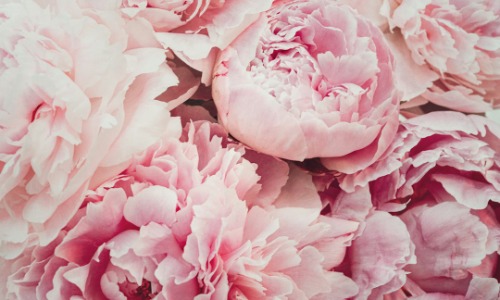
On the surface, this is a radiant poem that likens Yang Guifei’s beauty to the peony and celebrates Emperor Xuanzong’s love for her.
What the Third Prince longed for was “a gentle woman who would understand me.” Meeting Noble Lady Ying was exactly the experience of the line 解釋春風無限恨 — boundless sorrow clearing away like a spring breeze. She lightened his burden, and she became the object of a pure longing that went beyond political calculation.
The Woman Loved by Father and Son — Yang Guifei Herself
But what makes this choice of poem truly brilliant comes next.
Yang Guifei (Yang Yuhuan) was originally the consort of Emperor Xuanzong’s own son, Li Mao, Prince of Shou (寿王李瑁). Xuanzong, the father, fell for her. He had her first enter religious life as a Daoist nun (under the name Taizhen 太真), and then brought her into his own harem. The father took his son’s wife. Yang Guifei was a woman loved by both father and son.
With Noble Lady Ying, the direction is reversed. She is the consort of the father, the Yongzheng Emperor, yet she is loved by the son, Hongshi (弘時). But reversed or not, the structure — one beautiful woman loved by a father and his son — is exactly the same.
And in both stories, the one who finally sent her to her death was the very man who had loved her.
During the An Lushan Rebellion, when soldiers at Mawei Slope (馬嵬坡) demanded Yang Guifei’s death, Xuanzong could not protect her and ordered her to die. The Yongzheng Emperor, likewise, handed Noble Lady Ying the white silk to preserve the dignity of the imperial house. The man who loved her gave her up to protect the dynasty.
How much political guilt Yang Guifei herself bore is open to debate. But it is certain that the blame for the misrule that led to the rebellion was laid on her under the label of “the beauty who toppled the kingdom.” Even if it was politics that toppled the kingdom, the guilt was pinned on a beautiful woman. Here, already, falls the shadow of “death without fault.”
✦ Satoe’s Take: Among countless love poems, I believe the screenwriter deliberately chose a poem about Yang Guifei not merely because she was beautiful and beloved, but to overlay the whole pattern — loved by father and son, then killed by the man who loved her. If so, Noble Lady Ying’s entire life was folded into just four lines of verse.
The Omen Hidden in the Poem — The Curse of Beauty
The splendor of “Qingping Diao” was, in itself, the prelude to Noble Lady Ying’s death.
The theme of [The Curse of Beauty (紅顔劫)] — beauty becoming not a blessing but a curse — runs through this story too. The most beautiful, most beloved flower is the one scattered most cruelly.
The quotation of this poem layers two timelines. One is the happy present — a lovely encounter and a heart set free. The other is the tragic future — an omen of inescapable ruin. On first viewing, the audience is captivated by the poem’s beauty and the happy meeting. But as the story unfolds, they quietly come to realize the prophetic meaning the poem carried from the very start.
Empresses in the Palace often uses classical poetry to foreshadow a character’s fate: Liu Xiyi for the Curse of Beauty (年年歳歳花相似, “Year after year, the flowers look the same”), Zheng Sixiao for Shen Meizhuang (寒菊, “Cold Chrysanthemum”), and Li Bai for the Third Prince (“Qingping Diao”). A single line of poetry foretells a person’s life and death.
Forbidden Love, and a Second Poem: “Shang Xie”
The central incident of the story is the Third Prince Hongshi falling in love with Noble Lady Ying, his own father’s consort — a forbidden love that could never be tolerated at court.
Unable to contain his feelings, Hongshi repeatedly murmurs a line from the ancient yuefu poem “Shang Xie” (上邪, “O Heaven Above”):
我欲與君相知、長命無絶衰 I long to know you heart to heart, and may this love never fade or end.
“Shang Xie” is a fierce love song of the Han dynasty in which a woman vows, “O Heaven! Even if the mountains wear away, the rivers run dry, and heaven and earth become one, I will not part from you.” Hongshi poured his own feelings into that single-minded vow.
But the letter he wrote to Noble Lady Ying, at the urging of his attendant, became the decisive evidence of this love. A poem vowing eternal love became, word for word, a death warrant.
Noble Lady Ying had always rejected Hongshi’s advances. She had done nothing wrong. Yet the Yongzheng Emperor, to save the imperial family’s face, falsely accused her of “seducing the prince,” gave her the white silk, and ordered her to take her own life. She was not even given a chance to defend herself. Why?
Who Was Behind It? Five Agendas That Drove Her to Death
Noble Lady Ying’s death was no simple love affair. Several people’s agendas were tangled together, layer upon layer.
① Huanbi’s triple jealousy and calculation. It was Huanbi — Prince Guo’s principal wife and Zhen Huan’s younger sister — who sent Noble Lady Ying into the palace in the first place (→ [Huanbi]). Her motives were threefold: fear that a beautiful maid would steal her husband, envy of her sister Zhen Huan for being favored by the emperor, and political calculation as a spy for Prince Guo’s household.
② Consort Jing’s strategy to bring down the Empress. Consort Jing, Zhen Huan’s ally, saw the incident as a chance to strike at the Empress’s faction. The Empress was responsible for raising the Third Prince, so a scandal involving him could be denounced as her failure of supervision. Bringing down Hongshi would raise the chances that Zhen Huan’s son (the future Qianlong Emperor) would succeed to the throne — and lift Consort Jing’s own standing as Zhen Huan’s ally.
③ Zhen Huan’s succession strategy. Though she seemed uninvolved, Consort Jing’s moves rested on her alliance with Zhen Huan. For Zhen Huan’s long-term plan to make her son emperor, this was the perfect chance to eliminate a strong rival candidate, Hongshi.
④ The Yongzheng Emperor’s purge of Prince Guo’s household. For the emperor, too, the incident killed two birds with one stone. The official reason was “the dignity of the imperial house.” The real aim was to root out Prince Guo’s household as a potential threat and make an example of it to the other princely households. Noble Lady Ying’s past as a maid in that household served as the pretext.
⑤ The structural violence of the harem. And finally — no family, no allies, no defenses. In the harem, beauty and gentleness become weaknesses. Noble Lady Ying was simply crushed by pressure from four sides: male desire, female jealousy, schemes over the succession, and the emperor’s ambition.
Historical Check: A Record of a Death Sentence, and the Story That Filled the Gap
And here is the most important part. Noble Lady Ying has a faint historical shadow.
The drama’s Noble Lady Ying corresponds to Attendant Ying (英答応), a woman of the very lowest rank in the Yongzheng Emperor’s harem (daying 答応 was the bottom rank of imperial consorts), whose birth and death dates are unknown. The drama promotes her to “Noble Lady” (貴人), but the surviving records preserve only a faint trace of her name and rank. Almost nothing like a story has come down to us.
And according to tradition, she was ordered by the emperor to die. But the reason is not recorded. A romance with the Third Prince Hongshi appears nowhere in the sources. (I should note, however, that the record of Attendant Ying is extremely thin, and even the circumstances of her death sentence are poorly attested.)
In other words, the screenwriter poured a story into a historical gap: “a woman who is little more than a name, ordered to die for reasons no one knows.” This is the most vivid example of the weaving of history and fiction that we have seen again and again in this series (→ [The Real Model for Zhen Huan], [The Real Prince Guo, Yunli]).
✦ Satoe’s Take: Dying Without Fault, Because She Was Beautiful
What Noble Lady Ying’s story depicts is the structural despair of women living under the feudal system. From maid in a prince’s household to the emperor’s consort, she was always a tool in someone else’s power games.
Because she was beautiful, she was driven out of the prince’s household. Because she was beautiful, she was loved by the prince. Because she was beautiful, she alone was made to bear the guilt of that love. All she ever did was be beautiful. Her beauty was never once a blessing to her — it was truly the Curse of Beauty.
For a woman of low birth, there was usually only one way to survive the harem: draw close to someone powerful and win her protection. Concubine Cao (曹貴人), for example, attached herself to Consort Hua’s faction and, as her strategist, helped bring down other consorts, all to protect her own place and her daughter’s. Bending herself, joining a faction, pushing others down — that was the survival strategy of those without backing.
Noble Lady Ying did none of these things. She never bent herself to join anyone’s faction, never tried to push anyone down. She was beautiful, kind, and never schemed against others — and that is exactly why no one stood up for her, and why, when the trap closed, she had to die alone.
By our modern standards, someone who refuses to push others down is a “good person.” But in the harem, being morally good meant death. The good were the first to be erased — that was the hell of the harem.
If so, perhaps the other women were not villains from the start. When Zhen Huan first entered the palace, she wished only to avoid conflict and live quietly. An Lingrong, too, began as a timid, modest girl (→ [An Lingrong]). To survive in this hell, they had no choice but to change. Those who did not change could not live; those who refused were erased, like Noble Lady Ying. Her death, I think, illuminates from the other side why the women of the harem could not stay good.
And then the “crime” of having no fault at all — the ultimate injustice. (→ [The Crab Poem of the Man’yōshū: Those Eaten Without Fault])
Yang Guifei a thousand years earlier, and Noble Lady Ying in the Qing dynasty: both were loved by father and son, and both were sent to their deaths by the hand of a man who loved them. Even as the ages change, the fate of a beautiful woman placed beside power takes a startlingly identical shape. Before the calculations of the imperial line, a single woman’s life weighs no more than dust — and by giving a story to a nearly blank historical record, the screenwriter forces us to face that coldness.
In the end, the men who speak of love will erase even the woman they love to protect their own power. In “Qingping Diao,” Xuanzong gazed on Yang Guifei with a smile; yet at Mawei, he gave her up in exchange for his throne and his life. The Yongzheng Emperor, too, erased his own consort with a single length of white silk, for the sake of imperial face and imperial power. And Hongshi’s vow of eternal love — 長命無絶衰 — did nothing to protect her; it only became the evidence of her death. The sovereign’s smile sung in “Qingping Diao” and the coldness of the white silk are two faces of the same man.
But it was not only men who killed for power. It was Huanbi, driven by jealousy and calculation, who sent Noble Lady Ying into the harem. It was Consort Jing who seized on this love as a chance to topple the Empress, and behind her lay Zhen Huan’s strategy to make her son emperor. The women, too, were willing to let an innocent woman die for the sake of power. Man or woman, all who stand near power kill in the same way — that is the hell the harem was.
Conclusion: Two Poems and One Gap
The two poems the Third Prince offered to Noble Lady Ying each played their part.
“Qingping Diao” hid, behind the happiness of their meeting, the same fate as Yang Guifei — loved by father and son, and killed by the man who loved her. “Shang Xie” carried the irony of a vow of eternal love turning, word for word, into a death warrant. The beautiful lines of Li Bai and of Han yuefu poetry, crossing a thousand years, anticipate fate within a new story — such delicate, intelligent staging is the true charm of Chinese historical drama.
Yet at the core of that beautiful staging lay a single line: the historical blank of “ordered to die, reason unknown.” Into that small gap, the screenwriter poured poetry, intrigue, and one woman’s structural despair, raising up a tragedy that stays long in the viewer’s heart. Where history falls silent, story begins to speak — and Noble Lady Ying’s death is, I believe, its most beautiful and most cruel example.
◀ The historical counterpart: [Consort Qi and the Real Third Prince Hongshi] | The one behind it: [Huanbi (the wife who sent Noble Lady Ying to the palace)] | [The Real Prince Guo, Yunli] ◀ Related: [Li Bai’s “Bring in the Wine”] | [The Curse of Beauty] | [Shen Meizhuang and the Chrysanthemum] | [The Real Model for Zhen Huan] | [An Lingrong] | [The Crab Poem of the Man’yōshū: Those Eaten Without Fault] ◀